



Kriti Sanon’s recent Raksha Bandhan advertisement sparked debate over how brands portray Indian culture and festivals. The GIVA jewellery campaign faced criticism over Sanon’s outfit, with Kangana Ranaut also questioning the portrayal. Sanon defended the ad, but GIVA eventually withdrew it amid the backlash.

However, such controversies are nothing new. Over the years, several Indian brands have found themselves at the centre of debates over religion, culture, gender, fashion and representation.
Let’s learn about some of the advertisements that sparked controversy in the past.
Alia Bhatt’s Manyavar – Kanyadaan ad

‘Manyavar Mohe’ campaign introduced the concept of “Kanyamaan” (respecting the daughter) as an alternative to the traditional ritual of Kanyadaan.
In 2021, Alia Bhatt featured in Manyavar’s bridal campaign, which challenged the traditional concept of kanyadaan. The advertisement presented the bride as an equal individual rather than someone being ‘given away’ by her family.
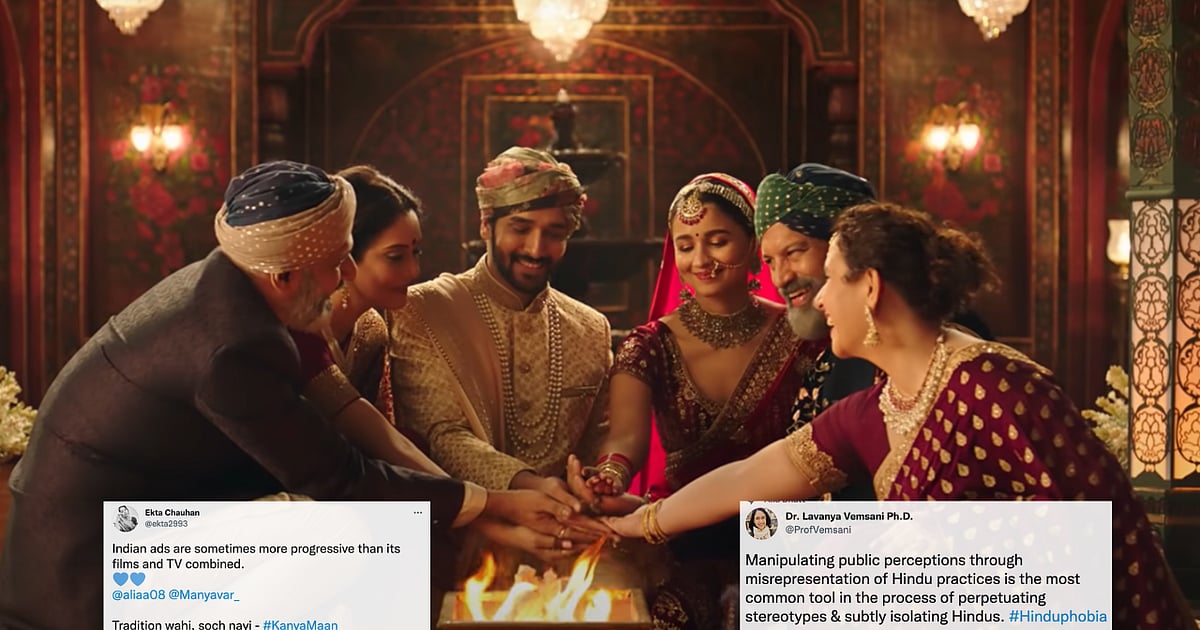
The campaign received praise from many viewers for questioning a traditional practice and presenting a more progressive idea of marriage. However, it also attracted criticism from sections of the audience who felt that the advertisement was unnecessarily questioning Hindu customs.
The controversy highlighted the difficult balance brands often face when they try to combine traditional ceremonies with modern ideas about equality and identity.
Tanishq – Diwali ad over its interfaith family theme
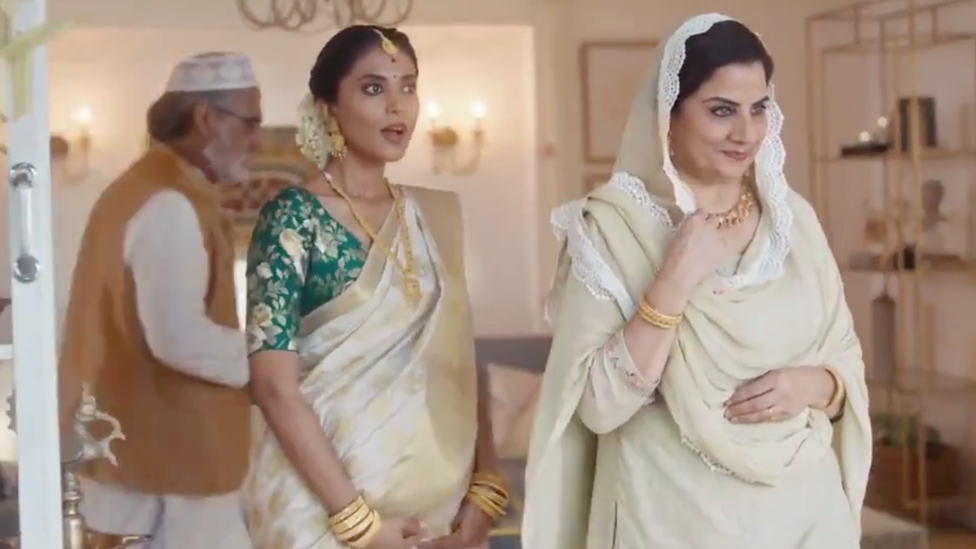
Tanishq’s campaign was intended to showcase an interfaith family and the idea of cultural harmony.
One of the most prominent advertising controversies in recent years involved Tanishq in 2020. Its Diwali-themed advertisement showed a baby shower being hosted for a Hindu woman by her Muslim in-laws.
However, it faced strong backlash on social media, with critics accusing the brand of promoting an interfaith marriage narrative. The advertisement was eventually withdrawn.
The episode became a major talking point about whether brands should use sensitive social themes in commercial campaigns, particularly when religion and identity are involved.
FabIndia – Diwali campaign over its festive branding

FabIndia also faced criticism over a Diwali campaign in 2021.
FabIndia ad controversy centred on the brand’s choice of the name ‘Jashn-e-Riwaaz’ for its festive collection.
Critics objected to the use of an Urdu phrase for a campaign associated with Diwali and argued that the branding did not adequately represent the Hindu festival. The campaign became part of a wider social media debate about cultural identity and how Indian festivals are represented by brands.
Following the backlash, FabIndia changed the campaign’s branding.
Sabyasachi – bridal jewellery and mangalsutra campaign

The campaign included bold imagery that some viewers considered inappropriate for a piece of jewellery traditionally associated with marriage.
Fashion designer Sabyasachi Mukherjee’s jewellery brand also faced backlash in 2021 over a campaign featuring models wearing mangalsutras.
Critics objected to the portrayal and accused the brand of hurting religious and cultural sentiments. The controversy became particularly intense on social media, prompting the brand to remove the campaign.
The episode showed how even established luxury brands can face criticism when they reinterpret symbols that have deep cultural and religious significance.
Kalyan Jewellers – Aishwarya Rai Bachchan ad

The advertisement showed Rai in an elaborate royal-style setting with a young dark-skinned boy holding an umbrella over her.
Long before the recent festival-related controversies, a Kalyan Jewellers campaign featuring Aishwarya Rai Bachchan sparked criticism in 2015.
Critics said the imagery evoked colonial-era racial stereotypes and depicted the child in a manner reminiscent of a servant. The campaign was withdrawn following the backlash.
The controversy demonstrated that advertising can attract criticism not only because of religious or cultural representation, but also because of the social messages conveyed through visual imagery.

Why do advertisements trigger such strong reactions?
Advertising is designed to attract attention, but that attention can sometimes become controversy. Brands increasingly use festivals, weddings, religion and social issues because these themes create an emotional connection with audiences.

However, these subjects also carry cultural and personal significance. What one viewer may see as a modern interpretation can appear disrespectful or insensitive to another.
The latest Kriti Sanon controversy is another example of this divide. While supporters saw the campaign as a contemporary celebration of Raksha Bandhan and individual choice, critics questioned whether the visual presentation was appropriate for a traditional festival. The advertisement was ultimately pulled after the backlash.
For brands, the challenge is therefore not simply to create an advertisement that goes viral, but to understand the cultural context in which it will be received. In an age where a campaign can reach millions within hours, a creative decision can quickly become a national debate.