
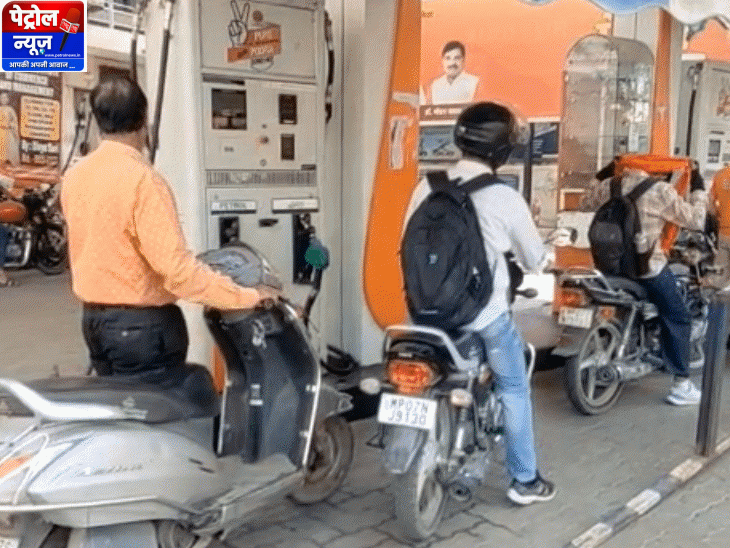


Due to new prices, petrol has become expensive by 1 rupee or more in Madhya Pradesh
Petroleum companies have increased the rates of petrol and diesel for the third time within 9 days. On Saturday, the price of petrol was increased by 87 paise and the price of diesel by 91 paise per litre. Due to this, petrol has become 1 rupee or more expensive in Madhya Pradesh.
This month, petrol and diesel prices have been increased three times across the country, including Madhya Pradesh. On May 15, the first increase of about 3 rupees per litre was made.
On May 19, they were increased for the second time by about 90 paise per litre. After today’s increase, petrol and diesel prices have collectively become about ₹5 per litre more expensive in May.
Why have prices increased?
The main reason for this increase is the fluctuation in crude oil prices in the international market. Before the war between Iran and America began, crude oil prices were $70 per barrel, which have now risen to over $100 per barrel.
Oil companies were under pressure due to rising crude prices, so they took this step to compensate for the losses. If crude oil prices continue to rise for a long time, petrol and diesel prices may be increased further.

Price increases up to four times from the base price
Fuel prices in the country are determined based on international crude oil prices and the rupee’s position against the dollar. Government oil companies update new rates every day at 6 AM under the ‘Daily Price Revision’ or Dynamic Pricing System. Before reaching the consumer, various taxes and expenses are added to the oil prices, which we can understand as follows-
1. Crude Oil Price (Base Price): India imports about 90% of its crude oil needs from abroad. The price per litre of oil is determined based on the barrels purchased from the international market.
2. Refining and Company Charges: Crude oil is refined into petrol and diesel in the country’s refineries. This includes refining costs and company margins.
3. Central Government’s Excise Duty: After leaving the refinery, the central government levies excise duty and road cess on it. This is uniform for all states across the country.
4. Dealer Commission: The price at which oil companies sell fuel to petrol pump owners (dealers) includes the dealers’ fixed commission, which varies for petrol and diesel.
5. State Government’s VAT: Finally, state governments levy VAT or local sales tax at their discretion. VAT rates vary from state to state, which is why fuel prices also differ in various cities like Delhi, Bhopal, Indore, and Jabalpur.
| State | Total Crimes Against Women (2024) | Estimated Female Population | Crimes per 10,000 Women |
| Rajasthan | 35,653 | 4 crore | Approx. 8.9 |
| MP | 32,832 | 4.26 crore | Approx. 7.7 |
| Maharashtra | 47,954 | 6.12 crore | Approx. 7.8 |
| West Bengal | 34,360 | 4.89 crore | Approx. 7.0 |
| UP | 66,398 | 11.45 crore | Approx. 5.8 |
Note:
Rajasthan ranks first, with nearly 9 women out of every 10,000 becoming victims of crime.
MP ranks second, with around 8 women per 10,000 affected.
Maharashtra also reports nearly 8 women victims per 10,000.
West Bengal records around 7, while UP reports nearly 6 women victims per 10,000 population.
Prices had not changed since 2024, cut before elections
Petrol and diesel prices in the country had remained stable since March 2024. Just before the Lok Sabha elections 2024, the government had provided relief to the public by cutting prices by ₹2 per litre.
However, technically, fuel prices in India are regulated, and companies can change rates every day based on the 15-day average price of international crude, but due to political sensitivity, these were not changed for a long time.
Companies were incurring a loss of 30 thousand crore every month
According to the central government, public sector companies like Indian Oil, Bharat Petroleum and Hindustan Petroleum were running at a loss due to high crude oil prices in the international market.
According to Sujata Sharma, Joint Secretary of the Ministry of Petroleum, companies are incurring a loss of about ₹30,000 crore every month on the sale of petrol, diesel and LPG.