


Thiruvananthapuram23 minutes ago

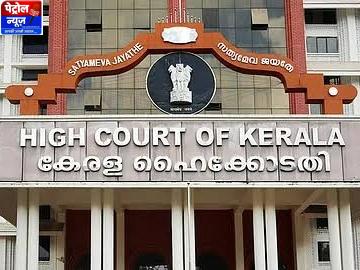
The Kerala High Court has refused to quash a rape case against a man accused of sexually assaulting a 17-year-old girl, observing that marriage cannot protect an accused from criminal liability under the POCSO Act when the victim is a minor.
Justice Jobin Sebastian made the observation in an order dated August 19, 2026. The accused had approached the court seeking to quash the FIR and subsequent proceedings, claiming that the girl was his legally wedded wife and that their marriage had been solemnised according to Muslim customs.
The accused has been booked under Section 375 of the Indian Penal Code and the Protection of Children from Sexual Offences (POCSO) Act, 2012.
Court: Marriage does not override POCSO
The court noted that the girl was 17 at the time of the alleged marriage and subsequent sexual acts. It held that even if the marriage had been solemnised according to Muslim personal law, that would not exempt the accused from liability under the POCSO Act.
The court pointed out that Section 2(1)(d) of the POCSO Act defines a person below 18 years as a child. Therefore, sexual relations with a person below 18 can attract the provisions of the Act, irrespective of whether the minor is claimed to be the accused’s wife.
The court said the allegations in the case prima facie disclosed the ingredients of offences under the POCSO Act and could not be dismissed at the preliminary stage.
Prosecution’s allegations
According to the prosecution, the accused took the minor girl to his home on October 23, 2021, where he allegedly raped her forcibly that night and over the next four days. His parents were also accused of assisting him in the alleged offence.
The accused, however, claimed that he had married the girl on July 23, 2021, when she was 17 years and one month old. He said the marriage was conducted according to Islamic customs in the presence of members of both families.
Marriage validity to be examined at trial
The High Court noted that there was no documentary evidence before it to establish that the alleged marriage had taken place. It said the question of whether the marriage was legally valid would have to be determined during the trial.
Since the material on record prima facie supported the allegations, the court refused to interfere with the FIR, final report and subsequent criminal proceedings.
The High Court subsequently dismissed the accused’s petition seeking to quash the case.