


Abhishek Garg19 hours ago

‘Modiji, do you have a close friend you talk to or seek advice from when you are stressed?’ British journalist Andy Marino asked this question in 2014.
Modi replied, ‘During my days in the Sangh, my mentor was Lakshmanrao Inamdar. I could speak openly to him when I was in trouble. Now, my thought process runs on autopilot.’
Modi’s answer shows how emotionally self-reliant he is.
On Narendra Modi’s 76th birthday, a story exploring five such psychological aspects of his personality…

The year was 1995, and Gujarat was preparing for assembly elections. Two powerful BJP leaders, Shankersinh Vaghela and Keshubhai Patel, clashed over who would become Chief Minister.
At the time, Narendra Modi was the organisational general secretary of the Gujarat BJP. He supported Keshubhai. Eventually, Keshubhai became Chief Minister.
However, a few months later, an angry Vaghela rebelled with 47 MLAs. The situation escalated to such an extent that Atal Bihari Vajpayee had to camp in Ahmedabad. After two days of discussions, Vaghela’s conditions were accepted.
One of these conditions was that Modi should be moved out of Gujarat. He was appointed national secretary in Delhi. Modi saw this as an opportunity and became close to senior party leaders in Delhi.
Modi handled organisational work in northern states such as Haryana, Himachal Pradesh, Punjab and Jammu and Kashmir.
He travelled to several countries, learnt about new technologies and computers, and expanded his network. He also frequently visited the RSS headquarters, Keshav Kunj, in Delhi.
In 1998, Keshubhai and Vaghela clashed again. Keshubhai became Chief Minister. However, the situation did not improve, and by the end of 2001, the search for a new Chief Minister had begun.
Narendra Modi met the criteria of all three key stakeholders, the RSS, Atal Bihari Vajpayee and LK Advani.
Atal Bihari Vajpayee called Modi to the Prime Minister’s residence and said, ‘You have put on quite a lot of weight eating Punjabi food in Delhi. Go back to Gujarat.’
Eventually, after six years, Modi was sent back to Gujarat and made Chief Minister directly. Throughout his political career, he has surprised people with several such comebacks.
Modi says, ‘I always turn difficult situations into opportunities. Whether in my personal life or political life, I have always done the same. The word “defeat” is not in my dictionary. I never think about losing. I never stop.’

Narendra Modi takes oath as Gujarat’s 14th Chief Minister on 7 October 2001.
What are the benefits of comeback ability?
- Comeback ability does not simply mean returning to an earlier level. It means learning from failure and moving to a stronger, wiser and more mature stage. It has two stages:
1. Resilience: The mind’s flexible ability to return to normal after stress or trauma.
2. Post-traumatic growth: After returning to normal, a person becomes more mature and mentally stronger than before.
- People who make comebacks believe that while events may be beyond their control, how they respond and whether they continue trying remain within their control. These qualities help protect people from prolonged disappointment or depression.

On 8 November 2016, at 8:15 pm, Prime Minister Modi announced in an address to the nation, ‘From midnight tonight, the ₹500 and ₹1,000 notes will no longer be legal tender.’ In one stroke, 86% of the country’s currency notes became invalid.
PM Modi kept the decision highly confidential. Even his ministers were informed about it at a Cabinet meeting that evening. Modi said, ‘I have conducted thorough research. If this fails, I will be responsible.’
In fact, Modi had selected six officers for the exercise, including Revenue Secretary Hasmukh Adhia. They were made to take an oath of secrecy. Some young researchers were also included in the team. They all worked from the Prime Minister’s residence. Demonetisation was implemented after a year of research.
From November 2016 to January 2017, PM Modi mentioned black money and demonetisation in every speech. This helped manage public sentiment.

On 13 November 2016, PM Modi said in Goa about demonetisation, ‘You have to endure 50 days of hardship.’
In his book How the BJP Wins: Inside India’s Greatest Election Machine, senior journalist Prashant Jha quotes a senior government official as saying, ‘When he spoke, we got a few more weeks of breathing space. Without his credibility, no government machinery could have implemented it without facing public anger and riots.’
PM Modi personally led every major decision. For instance, imposing a nationwide lockdown with four hours’ notice and monitoring the surgical strikes from the control room. Even after the Gen Z protests, he personally made and posted selfie videos on Instagram.
According to the book Narendra Modi: A Political Biography, during his first meeting after becoming Chief Minister, Modi told officials, ‘Do not worry about punishment. There will be no punishment in my office. You have to take risks. If something goes wrong, I will be responsible.’
What are the benefits of always being in command?
- Always being in command means taking decisions yourself and accepting responsibility.
- According to American psychologist Julian Rotter’s locus of control theory, people who take responsibility for success and failure tend to be more successful, mentally stronger and less stressed.
- Such people do not lose sight of their purpose because of external provocation or difficult circumstances. Instead, they think carefully and decide their next step. They are described as emotionally in control.

On 19 February 2026, during the AI Summit, PM Modi suddenly held the hands of Google CEO Sundar Pichai and OpenAI CEO Sam Altman, who were standing on either side of him, and gestured for everyone to hold hands and raise them together.
Most leaders understood the gesture and raised each other’s hands. However, Altman and Anthropic CEO Dario Amodei, who were standing beside each other, appeared slightly uncomfortable. They did not hold each other’s hands and only raised their fists. Both are competitors in the AI industry. Social media began referring to the moment as an ‘AI Cold War’.
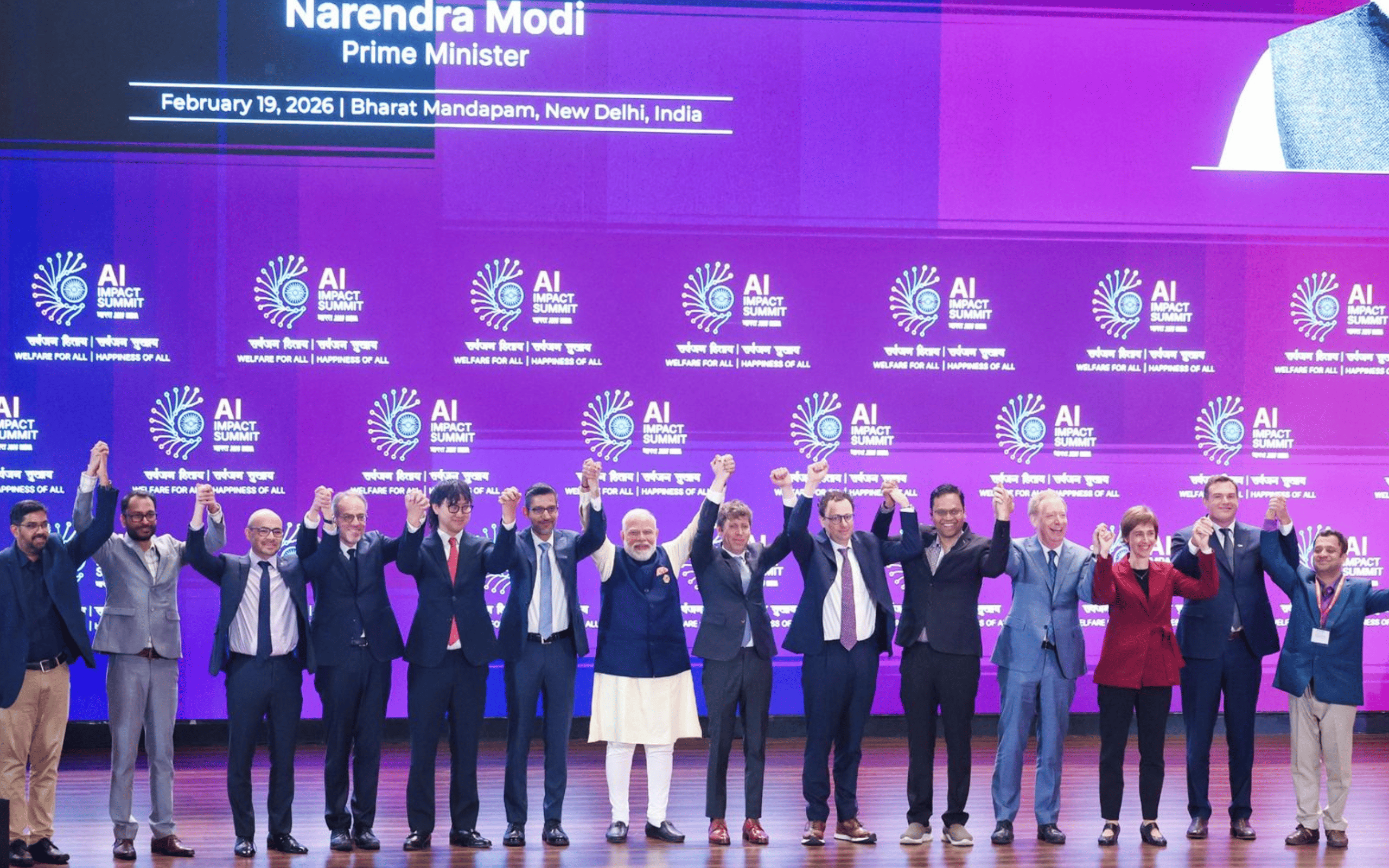
AI leaders gather for a group photograph with PM Modi during the AI Summit in New Delhi.
Something similar was seen during the BRICS Summit held in Delhi. On the evening of 12 September, leaders of all 11 member countries gathered for a group photograph. There was a small gap between them.
After a few photographs were taken, PM Modi held the hands of Russian President Putin and the Chinese President, who were standing on either side of him, and brought them closer together. All the leaders immediately held each other’s hands, reducing the gap.
What are the benefits of social boldness?
- People with social boldness can express themselves confidently and easily in different situations.
- British-American psychologist Raymond Cattell developed a model called the 16 Personality Factors. Social boldness is one of the 16 personality parameters in the model. People with high social boldness can handle social stress more easily.
- According to the theory of Albert Bandura, a former professor of psychology at Stanford University in the United States, when you present yourself effectively in a new environment, your self-efficacy increases. This means that your confidence in your own abilities grows. It also helps you overcome the fear of ‘What will people think?’

PM Modi sleeps for only around three and a half to four hours. He wakes up at 5 am. He then practises yoga, pranayama and meditation. He bathes in cold water in every season. He prefers vegetarian food. In other words, Modi follows a disciplined lifestyle in his personal life, and the same approach is reflected in his public life.
Within 10 days of becoming Prime Minister in June 2014, he visited South Block and merely mentioned the disorder in the office. The officials understood that he was strict about cleanliness and rules.

On 29 May 2014, Narendra Modi visited the PMO for the first time.
During his initial meetings, Modi made it clear that heavy words, lengthy discussions and red tape would not be tolerated. He asked officials to present ‘to-the-point’ action plans instead of theories. He instructed them to come prepared and be ready for follow-up meetings.
Ministers began reaching their offices by 9 am, and meetings started at 9:30 am. The Prime Minister himself attended every important meeting. Meetings often continued until the evening.
What are the benefits of self-discipline?
- Self-discipline does not mean giving up freedom. It means having control over your habits and life. It helps you work consistently and achieve your goals. It protects you from procrastination, or the habit of delaying work, and improves productivity.
- Two topics in psychology are the marshmallow experiment and delayed gratification. According to these concepts, people who postpone immediate pleasure for greater future benefits tend to be more successful and satisfied.
- According to neuropsychology, self-discipline keeps the prefrontal cortex of the brain active. This part of the brain is responsible for logical reasoning, impulse control and planning.

Two days after the Pahalgam terror attack, on 24 April 2025, PM Modi travelled to Madhubani in Bihar.
After speaking in Hindi for around 27 minutes, the Prime Minister suddenly switched to English and continued speaking for 82 seconds.
He said, ‘Today, from the soil of Bihar, I say to the whole world, India will identify, track and punish every terrorist and their backers. We will pursue them to the ends of the earth.’
By speaking in English from a Hindi-speaking region of Bihar, PM Modi sent a message to the world, particularly the Western world, that India would take action.
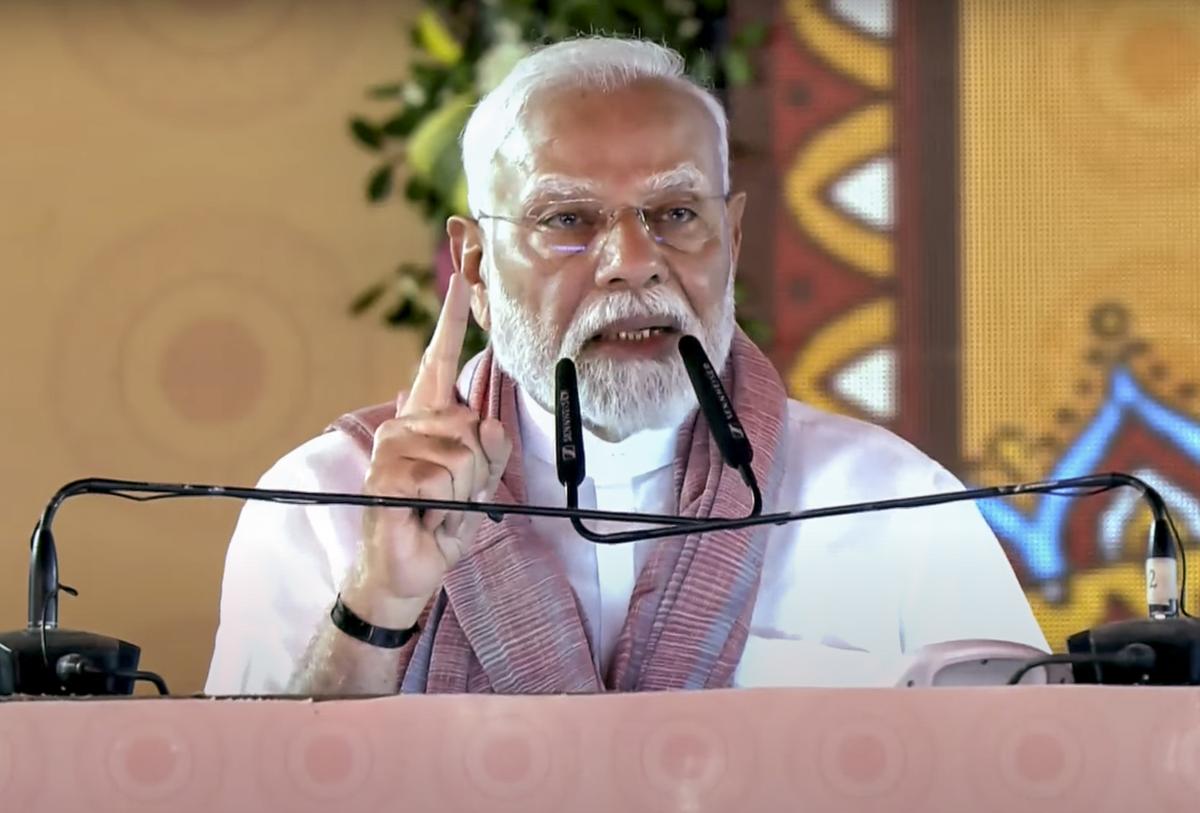
PM Modi delivered a message of action to the world by speaking in English from Madhubani.
What are the benefits of assertive communication?
- Speaking in the heat of emotions can cause a situation to spiral out of control. In such circumstances, assertive communication can be effective. It allows you to communicate your message to a targeted audience in their language, without being carried away by emotions. It conveys a sense of strength and sets boundaries without creating confrontation.
- In psychology, this is referred to as dog-whistle rhetoric. It means communicating a message in a way that reaches a specific group of people. This allows the message to reach people who are not physically present.
Expert input: Vinesh Sukumaran, positive psychologist and leadership consultant
References
- Narendra Modi: A Political Biography – Andy Marino
- The Paradoxical Prime Minister: Narendra Modi and His India – Shashi Tharoor
- How the BJP Wins: Inside India’s Greatest Election Machine – Prashant Jha
- Power Within: The Leadership Legacy of Narendra Modi – R. Balasubramaniam
- Modi Demystified: The Making of a Prime Minister – Ramesh Menon
- Narendra Modi: The Man, The Times – Nilanjan Mukhopadhyay
- Modi Demystified: The Making of a Prime Minister – Ramesh Menon
- The Modi Effect: Inside Narendra Modi’s Campaign to Transform India – Lance Price
- Modi’s India: Hindu Nationalism and the Rise of Ethnic Democracy – Christophe Jaffrelot
- Conversation with podcaster Lex Fridman