
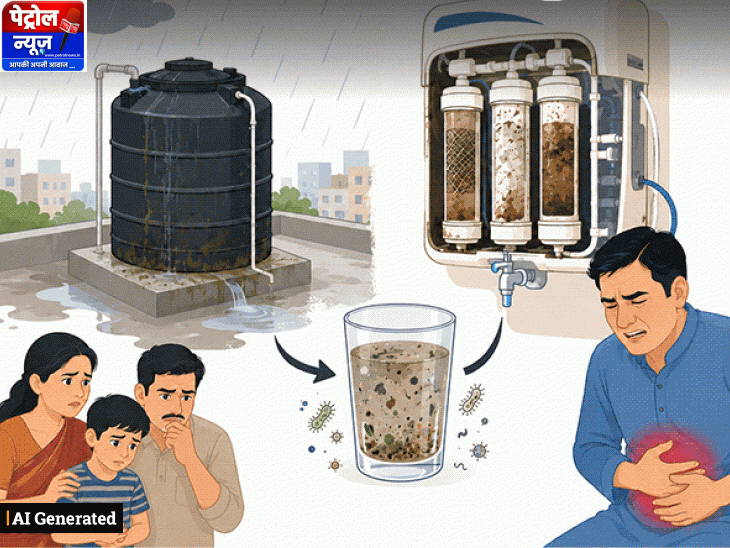


Rain can increase the risk of water contamination during the monsoon. Even if water looks clean, it may contain bacteria, viruses and other harmful microorganisms. The risk can rise due to sewage leaks, flooding and waterlogging.
Contaminated water can enter household supplies and collect in overhead or underground tanks. If tanks are not cleaned regularly or RO filters are not replaced on time, harmful microorganisms can enter the body through drinking water, increasing the risk of illnesses such as diarrhoea, typhoid and jaundice.
Therefore, today we will discuss cleaning water tanks and RO systems during the monsoon. We will also learn-
- Which diseases does the risk of increase due to contaminated water?
- What precautions should be taken while cleaning a water tank?
Expert: Dr. Arvind Aggarwal, Director, Internal Medicine, Shri Balaji Action Medical Institute, Delhi
Why is emphasis placed on cleaning water tanks and RO systems during the rainy season?
Understand this through the following points-
- The risk of water contamination increases during the rainy season.
- Waterlogging and dirt can cause bacteria and other microorganisms to enter water sources.
- If the tank is not cleaned for a long time, soil, debris, and sludge can accumulate at the bottom.
- Dirt buildup in the RO filter and membrane can reduce its efficiency.
- Drinking contaminated water increases the risk of diarrhea, typhoid, cholera, and other stomach-related illnesses. Therefore, cleaning is even more important during this season.
Does water get contaminated more quickly during the monsoon?
Yes, during rainfall, soil, dirt, and sewage water can reach the water source. Leakage in the pipeline can cause contaminated water to mix with the supply. In addition, bacteria and fungi grow rapidly due to moisture, causing the water to become contaminated quickly.
Does this problem occur only in old houses?
No, this problem can also occur in new houses if the tank is not cleaned regularly or the RO is not serviced on time.
What harm can be caused by using a dirty RO machine?
Bacteria and fungi can grow in it. In such a situation, the machine may not be able to filter the water completely. Drinking this contaminated water for a long time can cause digestive issues.
What diseases are associated with the risk of drinking contaminated water?
Contaminated water can cause several infectious diseases. It affects the digestive system first and can sometimes lead to serious infections. See all the health risks in the graphic-

Who is at greater risk?
Contaminated water is harmful to everyone, but it is riskier for some people, such as-
- People with a weak digestive system.
- People with weak immunity.
- People with a health condition (such as kidney, liver, or heart disease).
- People with diabetes.
- Young children and elderly people
- Pregnant women
Can using contaminated water also cause skin problems?
Yes, using contaminated water can cause problems such as itching, rashes, fungal infections, and hair loss. The risk is higher for people with sensitive skin.
How often should a water tank be cleaned?
Generally, a household water tank should be cleaned every 3-6 months. If you notice a smell, discoloration, or dirt in the water, it is better to have it cleaned immediately.
How can you tell when it is time to clean the water tank?
If the color, taste, or smell of the water changes, it is a sign that dirt has accumulated in the tank. See all the signs in the graphic-

Does leaving the water tank open increase the risk?
Yes, leaving the tank open allows dust, insects, mosquitoes, and dirty rainwater to enter it. This can lead to the growth of bacteria. Therefore, always keep the tank completely covered.
Can you clean the water tank yourself?
Basic cleaning of small tanks can be done. However, large or elevated tanks should always be cleaned by professionals.
What precautions should be taken while cleaning a water tank?
Empty the tank completely before cleaning. Use a clean brush and a safe disinfectant. Rinse the tank thoroughly after cleaning.
How often should the RO filter be replaced?
The lifespan of different RO filters varies. Generally, they are replaced as follows-
- Sediment (pre) filter: Every 3-6 months.
- Carbon filter: Every 6-12 months.
- Post-carbon filter: Every 12 months.
- RO membrane: Every 1-2 years.
Note that if the TDS level in the water is high, the filters may need to be replaced sooner. If the taste, smell, or flow of the water begins to change, the filters should be checked.
What are the signs that an RO is faulty or dirty?
See the graphic for the signs that an RO machine is faulty or dirty-

Is replacing only the filters sufficient?
No, along with the RO filters, it is also necessary to clean the machine, pipes, and storage tank.
Is RO water always 100% safe?
No, an RO provides safe water only when it is regularly serviced and cleaned. Water can become contaminated if the filters are damaged or old.
What should be done to keep water clean and safe during the monsoon?
During the monsoon, it is essential to regularly clean the water tank and RO system, as well as inspect the pipelines. For safe water, keep the following points mentioned in the graphic in mind-

How can water quality be checked at home?
The following methods can be used to check water quality at home-
- Pay attention to changes in the water’s color, smell, and taste.
- Have the water checked if it appears cloudy or contains particles or sediment.
- Check the water’s TDS (Total Dissolved Solids) using a TDS meter.
- Check the water’s pH level using a pH test kit.
- If you have any doubts, send a water sample to a recognized laboratory for testing.
- Have the water from borewells, hand pumps, or other local sources tested microbiologically from time to time.
Is a UV (Ultraviolet) or UF (Ultrafiltration) system also necessary along with RO?
It depends on the quality of the water and the toxins present in it, such as:
- If the risk of bacteria or viruses in the water is high, a UV system along with RO can be helpful.
- Meanwhile, a UF system is considered useful for removing small particles and impurities.
Is it unnecessary to clean the water tank if an RO system is installed?
RO purifies the water, but it does not clean the water tank. Over time, dust, dirt, rust, algae, and bacteria can accumulate in the tank. The RO filter does not prevent these impurities from reaching the tank. Therefore, regular tank cleaning is necessary even if an RO system is installed.

Is cleaning only the society’s water tank enough?
No, cleaning the water tank, pipelines, and RO system at home is equally important.
Which homes need to take extra precautions?
Understand this through the following pointers:
- Homes with small children, elderly people, or sick individuals.
- Places where borewell water is used.
- Places with old pipeline systems.
- Places where the water tank has not been cleaned for a long time.