

Investigative Reporting Team | Patna14 minutes ago

“We will get you an MBBS seat under the NRI quota at any score. You pay us ₹30,000 in India. The remaining ₹1 crore will be transferred to the candidate’s account from America or Dubai. No one will be able to say that you are not an NRI.”
“I am from Bihar. I have been living in MP for 11 years. So far, I have made more than 3,000 doctors. My network is spread across the entire country. Wherever you ask, I will lock an MBBS seat in that college.”
“There is no state where I cannot fix a college seat through my connections. We have built such a network that admission happens with just one call. Spend the money and I will get it arranged through any quota. We do not work like that; we pay and hold seats from colleges in advance.”
These are the claims made by agents operating in different states who are allegedly involved in selling MBBS seats. A common link emerged during the investigation: most of the agents traced by the Bhaskar investigative team were from Bihar or connected to agents from the state.

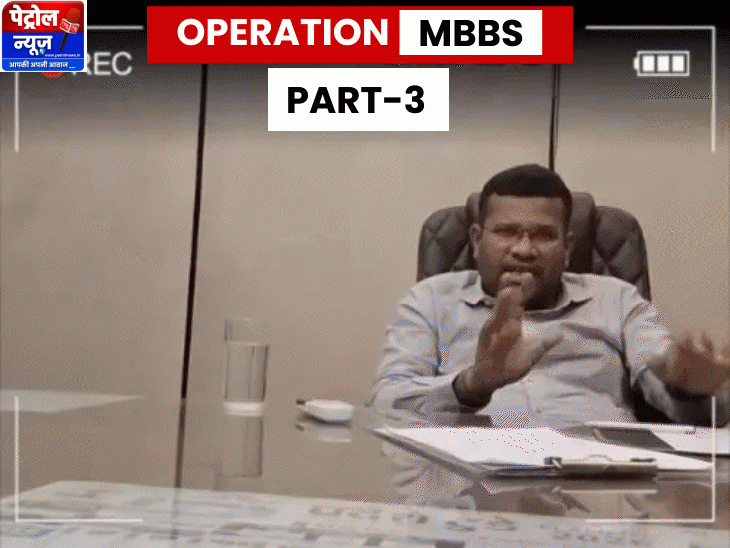
Operation MBBS Part 3: How Bihar agents built a nationwide network
In the third part of Operation MBBS, Bhaskar’s investigative team spoke to agents and intermediaries across more than six states to understand how MBBS seats are allegedly being sold through a chain resembling network marketing.
The investigation found that agents operating in different states were connected through Bihar. The biggest name to emerge was Prince, a native of Begusarai who has been living in Bhopal, Madhya Pradesh, for 11 years.
Information received by the investigation team suggested that Prince had allegedly helped create more than 3,000 doctors using fake documents and had also established a hospital in Bhopal with the earnings from this work.
A Bhaskar reporter travelled undercover to Salaiya in Bhopal, around 1,100 km away, to meet Prince. During the conversation, Prince himself described his alleged network.
Prince claims: ‘I have facilitated admissions for more than 3,000 students’
When the reporter said he had come from Bihar regarding an admission, Prince immediately claimed that the admission could be arranged. He said this was his job and that his people could be found in medical colleges across the country.
Prince said he had studied engineering but entered this business after failing to find a job. According to him, he has so far facilitated medical admissions for more than 3,000 students. He claimed that there was no medical college in the country, including those in Madhya Pradesh and Bihar, where he did not have a “setup”.
Prince said people from Bihar were present in every state and were connected to one another. He described the arrangement as a complete “marketing chain” for MBBS admissions.
According to him, people in different cities collect information about students, including their marks and other details, and forward it through the network. Colleges are then suggested according to the student’s marks and preferences.
Prince claimed that the formal procedures were completed, but the quota seats were already arranged in advance. Documents were allegedly prepared according to the candidate. He also said different people handled NRI documents and took responsibility for getting candidates admitted to colleges.
Prince claims ₹1-1.5 crore package for 220 marks
During the undercover discussion, Prince described the alleged pricing structure. He claimed that a student scoring 220 marks could obtain an MBBS seat through the NRI quota for around ₹1 crore to ₹1.5 crore, excluding hostel expenses.
Claiming to have connections in Chhattisgarh, he offered to arrange an MBBS seat there for ₹1 crore.
Prince also claimed to have access to different quotas and said seat deals were negotiated with colleges in advance. Once counselling began, the process of allotting those seats would start.
He further claimed that even candidates without an NRI relative could be presented as NRIs through documents. He said he could also arrange the NRI sponsor.
According to Prince, if a student had the surname Yadav, an NRI sponsor with the same surname could be arranged. On paper, the sponsor would appear to be paying the student’s educational expenses, while the actual money would allegedly come from the student’s family.

Pradeep claims: ‘Settings’ available in Rajasthan and Bengal
The investigation then led to Pradeep, a native of Katihar in Bihar who is based in Noida. Information received by the team suggested that he handled admissions for many students from Bihar and Uttar Pradesh.
Bhaskar’s undercover reporters separately approached Pradeep regarding two students, with scores of 215 and 220, seeking MBBS admission.
Pradeep claimed that agents managed NRI quota seats and said colleges would struggle to fill such seats without them.
He claimed to have arrangements for candidates scoring between 215 and 220 in Rajasthan and Bengal. Apart from All India Counselling, he offered admission options in Rajasthan and West Bengal.
Pradeep said admissions could allegedly be arranged even when candidates did not have NRI documents. He quoted ₹1.5 lakh for getting the candidate’s name cleared on the list, followed by ₹4.5 lakh for NRI documentation.
He also mentioned a foreign transaction equivalent to ₹10 lakh through an NRI account, along with an additional charge of around 2% for the foreign transaction.
Agents allegedly use overseas transactions for NRI admissions
Pradeep made another significant claim about the alleged system. According to him, an overseas money transaction has to be shown for an NRI-quota admission. He claimed that after admission, the transaction was arranged through associates based abroad. He said transactions from America were becoming a new trend.
Pradeep stated that funds for NRI admissions came from outside India and that agents had overseas connections. The money was allegedly transferred directly to college accounts.
He also described a wider process involving separate people for different stages, including alleged manipulation of NEET scores and counselling, inclusion of candidates on NRI-document lists, arranging sponsors and handling financial transactions.

Nikhil Yadav: The next link in the chain
During the discussion with Pradeep, the reporters obtained the number of Nikhil Yadav, a resident of Raxaul in Bihar. Nikhil was described as having contacts with government and private medical colleges across the country and operating from Delhi.
The conversations between Pradeep and Nikhil revealed further links in the alleged network. Several Bihar-based agents operating from different states were mentioned, showing how one intermediary led the investigation to another.
Nikhil claims colleges hold quota seats in advance
Nikhil claimed that deals with colleges were finalised even before the academic session began. According to him, colleges communicated the rates for quota seats, agents negotiated the amounts, paid an advance and had seats held for prospective candidates. The final settlement was allegedly made later.
He said students could be taken personally to colleges for admission and, when required, flown from Delhi to Bengaluru. Nikhil also referred to MCC’s NRI rules, claiming they helped agents arrange quota seats for candidates with low scores.
He said negotiations were more difficult in Bihar and Bengal because of unclear NRI admission rules and documentation, while the process was easier in other states.
According to Nikhil, the network divided responsibilities among different people. One person contacted students and their families, another prepared NRI documents, another arranged overseas transactions and sponsors, while others handled counselling, registration, college visits and negotiations.
‘Settings’ from Hyderabad to Bengal
Nikhil claimed to facilitate admissions in Hyderabad, Telangana, and West Bengal. He said agents across the country were familiar with the process and claimed that a major opportunity would emerge in Rajasthan during the third counselling round. He said agents were in constant contact with colleges and that arrangements for NRI and management seats in deemed universities had already been finalised.
Nikhil claimed agents avoided discussing admissions directly with colleges over the telephone. Candidates were first required to complete counselling, registration and NRI documentation. They were then taken to the college for face-to-face meetings.
According to him, this arrangement helped prevent agencies from tracing the complete chain and protected both colleges and agents.
He claimed NRI quota was the easiest route and that agents pre-negotiated seats with colleges. College fees and agent commissions were handled separately, while agents also allegedly took commissions linked to annual hostel expenses of around ₹2 lakh.
Nikhil claims ₹35-40 lakh needed before admission
Nikhil said parents should have ₹35-40 lakh ready for the first year after admission. He also mentioned packages of around ₹95 lakh for some colleges. He named Maheshwara and Raja Rajeswari colleges in Hyderabad, claiming that he had recently booked a seat for one candidate and was processing another admission.
He also spoke about an admission for a girl for a package of around ₹95 lakh. Rather than simply giving candidates a college number, Nikhil said he would personally fly with them and facilitate a face-to-face meeting with the concerned people.
Agents target students with low marks
The investigation found that low-scoring candidates were a particular focus of the agents approached by the reporters.
When the undercover team mentioned scores of 215 and 220, agents immediately began offering options in different states and under the NRI quota. Discussions then shifted to packages and additional expenses.
Prince quoted ₹1.10-1.20 crore for a student scoring 220 marks. Pradeep discussed arrangements for scores between 215 and 220 in Rajasthan and Bengal, while Nikhil described the broader chain involving documents, counselling, services and college placement.
One agent leads to another
Although Prince, Pradeep and Nikhil were approached in different locations, their accounts revealed a similar alleged operating pattern.
First, the student’s marks and category are obtained. College and quota options are then suggested according to the candidate’s score and budget. If NRI documents are unavailable, a sponsor is allegedly arranged.
The candidate is subsequently passed from one specialist to another, covering documentation, counselling, registration, financial transactions and finally college admission.
Bhaskar’s team said it spoke to more than 50 agents across Bihar, Madhya Pradesh, Bengal, Rajasthan, Uttar Pradesh and Delhi. Around 80% were found to be from Bihar, while others were reportedly connected to Bihar-based agents.
Three Bihar-based agents, Prince, Pradeep and Nikhil, claimed connections with colleges in Rajasthan, West Bengal, Telangana, Karnataka, Chhattisgarh and other states.

Mousam claims access to government medical colleges
The investigation subsequently reached Mousam, a native of Purnia who operates from West Bengal. She claimed to have lived in Bengal for a long time and to run a network for MBBS admissions there.
The reporters contacted her using a NEET scorecard showing 545 marks.
Mousam claimed that securing a government medical college through the normal process would be difficult at that score, but said she could arrange admission for a higher payment through different quotas.
She claimed to have a network involving government medical colleges in Rajasthan and Bengal and said admissions could be arranged through “jugaad”, meaning connections or manipulation.
Mousam claims direct access to college principals
Mousam further claimed that she had strong connections in government colleges and could arrange direct meetings with principals. She asked the candidate to come to Bengal and deposit ₹1 lakh, after which she would allegedly arrange a face-to-face meeting with a principal in Kolkata.
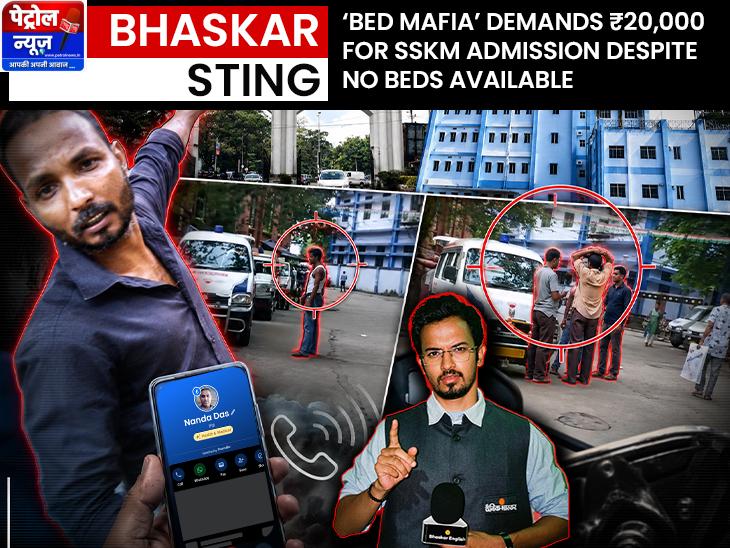
She claimed that meetings could be arranged at several government medical colleges in West Bengal and Rajasthan, naming RG Kar Medical College and Hospital, SSKM Medical Education and Research, and Nil Ratan Sircar Medical College and Hospital in Kolkata.
According to her, candidates could not simply walk into a government college to discuss such deals. They first had to approach her office, from where they would allegedly be taken to the college.
MCC registration comes first
Mousam repeatedly emphasised that MCC registration had to be completed before any further process. She claimed that her network would provide step-by-step assistance if candidates faced difficulties with registration and suggested completing the online process from a café.

Rupesh claims black money can be included in admission packages
Another Bihar-linked agent, Rupesh, was approached through the Boring Road admission network in Patna. Undercover reporters contacted him on different dates while posing as candidates.
Rupesh claimed that his network extended to medical colleges outside Bihar and that he had an office in Bengaluru from where admissions could be arranged anywhere in the country.
For Karnataka private medical colleges, he quoted packages of around ₹1 crore to ₹1.5 crore for candidates scoring between 213 and 250. He described a ₹1.40 crore package involving around ₹36 lakh in college fees and ₹40 lakh allegedly paid in black. For a ₹1.75 crore package, he said around ₹84 lakh would be required in the first year, including approximately ₹44 lakh in college fees and ₹40 lakh separately in black.
He also quoted around ₹1.05-1.10 crore for West Bengal, ₹1.05 crore for Rajasthan and around ₹1.15 crore for Himalayan Medical College. He claimed admissions could also be arranged in Chennai and Puducherry.
Two years’ fees allegedly taken to avoid bank guarantee
Rupesh also described an alleged method used when families could not provide a large bank guarantee.
He said some colleges demanded guarantees covering a substantial portion of the fees. Where families could not provide them, colleges allegedly offered the option of paying two years’ fees in advance.
Rupesh claimed additional money was demanded outside the official fee structure but was not directly collected by colleges. According to him, agents handled such payments separately. He again referred to his Bengaluru office, claiming that admission arrangements across different states were managed from there.
Bihar agents allegedly create local networks across India
The investigation ultimately found that the alleged system extends beyond individual agents. Bihar-based intermediaries have reportedly established contacts with local agents in different states, allowing them to operate without directly facing resistance in unfamiliar regions.
The chain begins with people identifying prospective students and collecting their marks, category and budget. Other agents then handle quota options, NRI documentation and sponsors, while separate intermediaries deal with counselling, registration, overseas transactions and college-level negotiations.
The investigation also found that agents often avoided direct communication with colleges, instead passing candidates from one intermediary to another. This structure, according to the investigation, makes the network resemble a marketing chain.
The agents’ claims regarding colleges and admission arrangements were also put before the concerned institutions for verification. However, the repeated links between agents, the transfer of contact numbers and the division of responsibilities revealed by the undercover conversations point to a wider network allegedly operating across multiple states.
At the centre of this network, the investigation found a recurring Bihar connection, with agents who originated in the state now operating from Madhya Pradesh, Uttar Pradesh, Delhi, West Bengal, Bengaluru and other parts of the country while allegedly facilitating MBBS admissions through quota-based arrangements.