
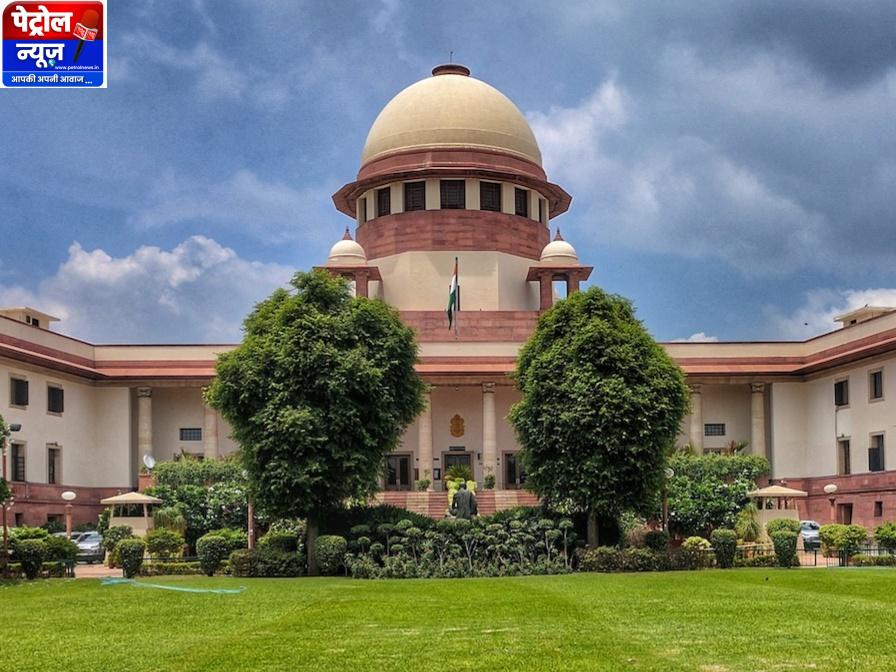


The Supreme Court said on Monday that if someone’s arrest is declared unlawful because the reasons for arrest were not communicated, the police will have to obtain a magistrate’s approval before re-arresting them.
The court said the accused must be informed in writing of the reasons for the arrest before being re-arrested. Approval from the senior officer of the police officer who made the first arrest will also be required.
Reasons for re-arrest must be given to magistrate
The police will have to apply to the magistrate and explain why the accused was not informed of the reasons at the time of the first arrest. The application must also have the consent of the immediate senior officer of the police officer concerned.
The Supreme Court said the officer who made a mistake during the first arrest cannot decide on the re-arrest. The investigation will also have to be assigned to another officer.
Departmental inquiry against officer who made first arrest
The court has ordered a departmental inquiry against the police officer concerned. If the officer is found guilty, action will be taken against him and the finding will also be recorded in his service book.
Re-arrest only after magistrate is satisfied
The magistrate will grant permission only if satisfied that there was a genuine reason why the accused could not be informed of the grounds of arrest the first time. The grounds must also have been provided in writing later, and the re-arrest must be necessary.
Article 22(1) applies to every arrest
The court said that Article 22(1) of the Constitution applies to all arrests. It must also be complied with in arrests made under special laws.
The accused does not need to prove that they suffered prejudice because the grounds of arrest were not communicated. It is a fundamental right.
Release after unlawful arrest is not bail
The court clarified that when an arrest is quashed for violating Article 22(1), the person’s release will not be treated as bail.
This ruling builds on the principles laid down in the 2025 case of Mihir Rajesh Shah v. State of Maharashtra.