

3 hours agoAuthor: Harshita Giri

The debate over what children should eat in government schools is back in the spotlight after the West Bengal government partnered with the International Society for Krishna Consciousness (ISKCON) to prepare mid day meals in a section of government schools in Kolkata.
Since ISKCON follows a strictly vegetarian kitchen, the move raised concerns that eggs, which are already part of the state’s school meal menu, might be dropped.
Addressing those concerns, the state government clarified that while ISKCON will prepare the vegetable based meals, eggs will continue to be served separately through self help groups.
The decision has reignited a nationwide debate over school nutrition. So, what is the PM POSHAN scheme, why do some states serve eggs while others do not, and is India serving enough nutrition on school plates?
What is the mid-day meal scheme?
India’s Mid Day Meal Scheme, now known as PM POSHAN (Pradhan Mantri Poshan Shakti Nirman), is one of the world’s largest school feeding programmes.
Launched nationwide in 1995, it provides free cooked meals to children studying in Classes 1 to 8 in government and government aided schools.
According to the Ministry of Education, the scheme benefits nearly 12 crore children studying in more than 11 lakh schools across the country.
While the Centre provides financial support and lays down nutrition standards, state governments decide the menu based on local food habits, availability of ingredients and regional preferences.

What should be on a child’s plate?
Under the PM POSHAN scheme, the Centre sets minimum nutrition standards for every school meal. While the menu varies across states, it typically includes cereals, pulses, vegetables and cooking oil.

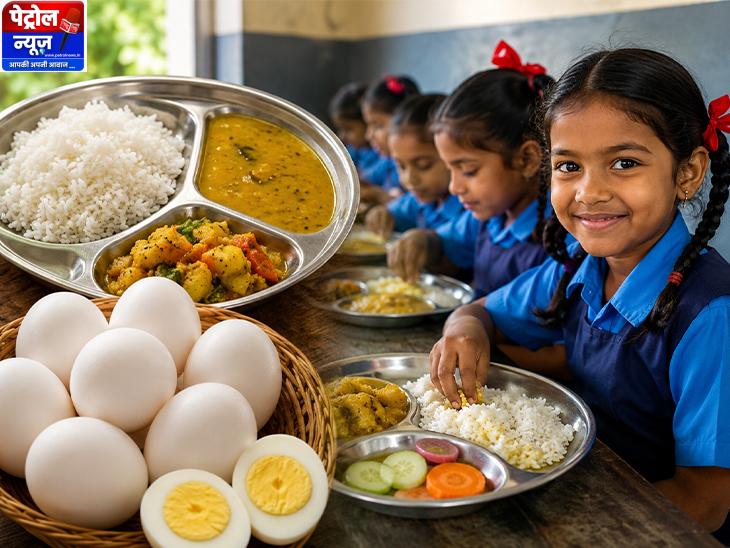
Several states, including West Bengal, Tamil Nadu, Karnataka, Andhra Pradesh, Telangana, Odisha, Kerala, Bihar, Jharkhand, Chhattisgarh, Assam and Tripura, also serve eggs on certain days of the week. Students who do not eat eggs are usually offered alternatives such as bananas or milk.
Eggs remain at the centre of the debate because they are an affordable source of protein and nutrients needed for children’s growth, while some groups prefer vegetarian meals for religious or cultural reasons.
Is India serving enough nutrition?
Despite running one of the world’s largest school feeding programmes, India continues to face serious nutrition challenges.

The Indian Council of Medical Research (ICMR) and nutrition experts have emphasised the importance of including protein-rich foods such as eggs, milk and pulses in children’s diets to address undernutrition.
They also note that the quality, hygiene and regular supply of school meals are as important as the menu itself.
When the scheme has fallen short
While PM POSHAN has improved nutrition for millions of children, official audits show that implementation remains uneven.
The latest Comptroller and Auditor General (CAG) performance audit found instances where schools failed to serve meals on scheduled days, eligible students were not paid the mandatory Food Security Allowance, and meal records exceeded actual attendance.
The audit also flagged irregular fund transfers, poor storage of food grains, inadequate dining facilities and weak monitoring in several areas.
These findings suggest that while the scheme has expanded its reach, ensuring consistent quality and accountability remains a challenge.
How do other countries feed school children?
Many countries treat school meals as an important part of public health.