

15 hours agoAuthor: Samira Siddiqui

Sending humans to space is not simply about building a rocket and a spacecraft. Astronauts have to undergo years of technical, physical and medical preparation, learn how to respond to emergencies, practise mission procedures repeatedly and remain isolated from potential infections before launch.
As India prepares for its first crewed Gaganyaan mission, the Indian Space Research Organisation (ISRO) is also building the infrastructure it will need if human spaceflight is to become a regular capability rather than a one-off demonstration.

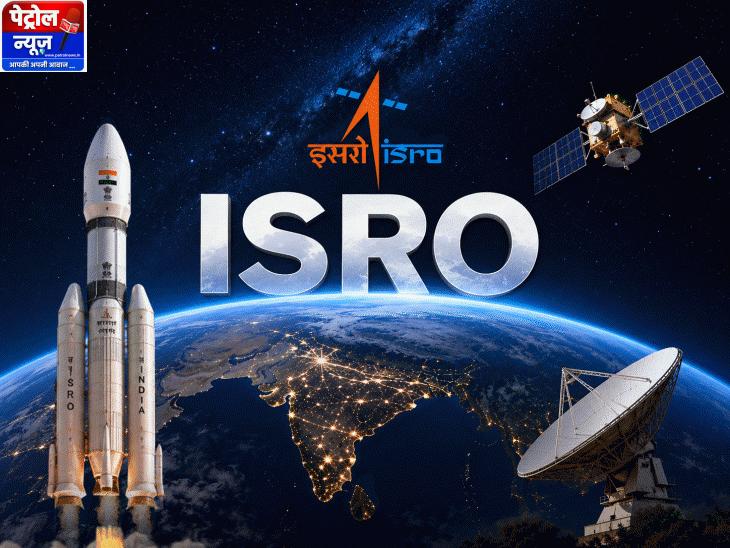
Gaganyaan is ISRO’s first human spaceflight mission, aiming to send three astronauts 400 km above Earth for three days and safely bring them back. Image credit: ISRO
One such facility is the proposed Gaganyatri Nivas and Crew Isolation Facility at Satish Dhawan Space Centre (SDSC-SHAR), Sriharikota.
ISRO has floated a tender for the planning, design, construction and commissioning of the facility. The project is being taken up as part of the agency’s wider effort to establish the infrastructure required for sustained human-spaceflight activities.
What is Gaganyatri Nivas?
Gaganyatri Nivas can broadly be understood as dedicated accommodation and support infrastructure for astronauts, or Gaganyatris, associated with human-spaceflight missions.
The facility is being planned alongside a crew isolation facility at Sriharikota.
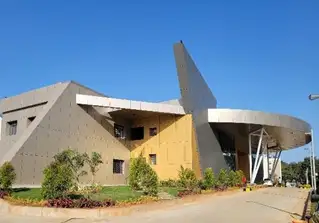
Astronaut Training Facility established in Bengaluru caters to Classroom training. Image credit: ISRO
Gaganyatri Nivas should not be seen as a replacement for ISRO’s existing astronaut-training infrastructure. ISRO already has an Astronaut Training Facility in Bengaluru, where Gaganyaan crew training includes classroom instruction, physical fitness, simulator training, and flight-suit training.
Instead, the Sriharikota facility would become another important piece of the overall crew-management system, particularly because Sriharikota is India’s primary spaceport and the location from which the Gaganyaan mission will eventually launch.

Why does an astronaut need to be isolated before launch?
Crew isolation is an important part of human-spaceflight preparation.
Once astronauts are inside a spacecraft, they cannot simply leave if they develop an infection. A relatively minor illness on Earth can become a serious problem in a confined spacecraft, where medical resources are limited, and the crew has to continue operating critical systems.
This is why astronauts are generally placed under controlled medical and environmental conditions before launch.
For India, a dedicated facility near the launch complex can make this process more organised.

Does this mean Indian astronauts will no longer need training abroad?
India’s first group of Gaganyaan astronaut-designates underwent training in India as well as overseas training, including a programme in Russia. Earlier ISRO and government documents confirm international cooperation in astronaut selection and training for the first Gaganyaan crew.
However, ISRO has steadily expanded its own astronaut-training capabilities.
The agency says its Astronaut Training Facility in Bengaluru already supports classroom training, physical fitness, simulator training and flight-suit training. Its training programme includes academic courses, Gaganyaan flight systems, microgravity familiarisation through parabolic flights, aero-medical training, recovery and survival training, flight procedures and crew-training simulators.
Therefore, Gaganyatri Nivas should be viewed as part of the expansion of India’s domestic human-spaceflight infrastructure, rather than as proof that all astronaut training will now happen at Sriharikota or that overseas training will completely end.

Also read: Can animals detect cancer?: Bengaluru startup combining dogs’ powerful sense of smell with AI to spot cancer So, where does the actual astronaut training happen?
Astronaut training is spread across multiple facilities because it covers technical, medical, physical, and emergency skills. ISRO’s Bengaluru facility handles areas such as spacecraft systems, space medicine, microgravity, recovery, and survival training. Astronauts also use virtual-reality and mock-up simulators to practise mission procedures, communication, emergency exits, and unexpected scenarios, preparing them for situations they could face in space.

What Gaganyaan Nivas means for India’s astronaut programme
The new facility does not mean Sriharikota will become India’s only astronaut-training centre. Instead, it will add another layer to the country’s growing human-spaceflight infrastructure. Bengaluru already houses the main astronaut-training facility, while Sriharikota provides the launch complex and is now being planned to include dedicated crew-isolation and Gaganyatri accommodation facilities.
Also read: Do you blindly scan every QR code?: New ‘Rogue Auto QR Code’ scam could put UPI users at risk; follow these 5 tips to protect yourself Building a wider human-spaceflight ecosystem
The Indian Navy and other agencies are involved in crew recovery and survival training, while ISRO, DRDO, the Indian Air Force, academia and other institutions contribute to different aspects of the programme. Together, these efforts are helping India move beyond preparing astronauts for a single mission and build the infrastructure, training systems and expertise needed for a sustained and repeatable human presence in space.