
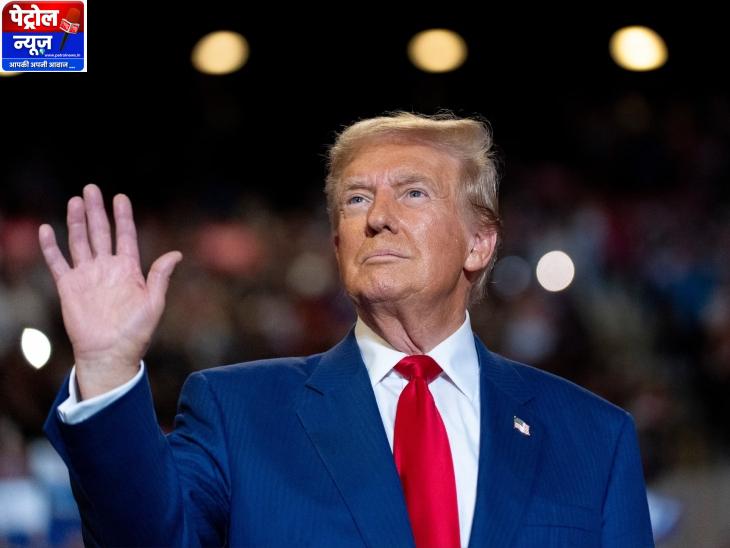


A federal judge on Monday blocked the Donald Trump administration from implementing a new immigration rule that would limit how long foreign students and journalists can remain in the United States without applying for an extension.
US District Judge F. Dennis Saylor in Boston ruled in favor of a coalition of unions and higher-education advocacy groups, just one day before the Department of Homeland Security (DHS) rule was scheduled to take effect.
What was Trump’s 4-year visa rule?
The proposed rule, which was finalised in July 2026, would have handled the decades-old “duration of status” policy that had allowed foreign students (F visas), exchange visitors (J visas), and foreign media representatives (I visas) to remain in the US for as long as their study programme or employment continued.
The rule would have set a maximum four-year period for these visas, replacing the previous system in which students could generally stay for the duration of their authorised academic programme. What does US judge’s ruling mean for Indian students?
The number of Indian students enrolling in undergraduate courses in the US for the 2025-26 academic year has declined by 15%.
The findings were published in a report by a non-profit organisation representing more than 1,100 higher education institutions.
According to the report, overall undergraduate applications for the 2026-27 academic year increased. However, the number of international applicants had fallen by 10% as of March 1, marking the largest decline on record.
The report also recorded a 15% drop in applications from India, which is currently the largest source of international students in the US.

Foreign students contribute $41 billion to the US economy
In the 2024-25 academic year, more than 363,000 students from India enrolled in various courses at US educational institutions.
According to the report, international students contributed $41.77 billion to the US economy. This contribution is projected to reach $38.37 billion in 2026-27.
Earlier, a report by NAFSA: Association of International Educators said international student enrolment at US colleges and universities could decline by around 110,000 in 2026 due to uncertainty surrounding stricter visa rules and immigration policies.
International student enrolment was estimated at 1.169 million in 2025-26. However, the number has since fallen to 1.057 million.
Why the US court blocked the rule?
Saylor said DHS had relied on “exceptionally weak” justifications for the policy. The department had cited national security concerns and the need to prevent fraud in the visa system.
However, the judge found that DHS had failed to meet its legal obligations to properly consider concerns surrounding the policy change and examine less restrictive alternatives.
The ruling was issued by Saylor, who was appointed by Republican President George W. Bush.
DHS criticizes court ruling
DHS General Counsel James Percival criticized the decision, arguing that it would allow what he described as widespread abuse of the US immigration system.
He claimed the existing system could allow foreign students to remain in the US for decades while taking only limited classes.
New rule would have changed decades-old system
Saylor said the Trump administration’s rule, adopted in July, would overturn a system that has been in place for nearly five decades.
Under the existing “duration of status” system, foreign students can generally remain in the US as long as they maintain the conditions of their visa.
The new policy sought to impose fixed limits on the length of stay.
Four-year limit for students and exchange visitors
Under the proposed rule:
F visas for international students would be limited to four years.
J visas for cultural-exchange visitors would also be capped at four years.
I visas for foreign journalists, which can currently remain valid for years, would be limited to 240 days.
The US currently has around 1.6 million F-visa holders and approximately 500,000 J-visa holders.
Universities warn of major economic impact
Saylor highlighted the large number of international students at major US research universities, including MIT and Harvard, particularly in graduate programs.
The judge said the rule could result in significant financial losses for universities and a decline in international student enrollment.
He warned that the potential damage to the US higher-education system and the broader economy could be “catastrophic.”
Higher education groups welcome ruling
Miriam Feldblum, head of the Presidents’ Alliance on Higher Education and Immigration, one of the groups that challenged the rule, welcomed the decision.
She said the ruling recognized the potential harm the policy could cause to international students, universities and the US economy.
The judge’s decision means the longstanding duration-of-status system will remain in place while the legal challenge continues, allowing US colleges and universities to continue attracting and educating international students and researchers under the existing framework.