
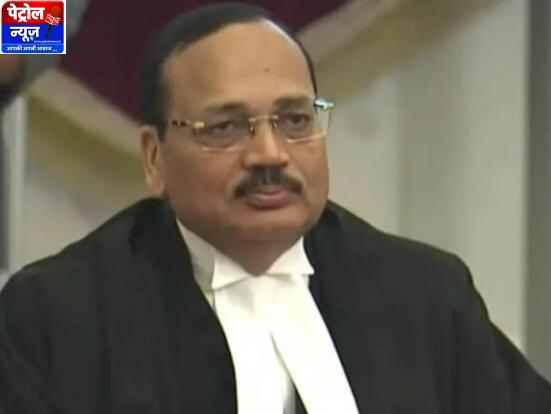


Chief Justice of India (CJI) Suryakant said on Saturday that conservation and development are not in conflict, but need to be balanced.
He said that the question before the courts was no longer conservation versus development. The question was how the two could be pursued together and sustained over the long term.
The CJI described the Supreme Court as the “banyan tree” of environmental justice. He said the court had strengthened environmental law over four decades.
The CJI was speaking at the inaugural session of the National Green Tribunal’s (NGT) two-day international conference at Vigyan Bhavan in New Delhi. Prime Minister Narendra Modi launched the NGT mobile app at the event.
No single constitutional path for environmental protection
The CJI said there was no single prescribed path in the Constitution for environmental protection. He also cautioned the courts against copying identical judgments.
He said the Supreme Court had recently introduced the concept of ‘eco-centric proportionality’. Under this approach, environmental protection must be stringent, but it must also take changing realities into account.
The CJI said this concept had brought about a major shift in thinking. Development can now be permitted only with enforceable conditions, expert oversight, restoration, compensatory afforestation and accountability.
Shift from environmental rights to climate rights
The CJI said an important shift was the move from environmental rights towards climate-related rights.
He said recent climate-related judgments by the Supreme Court of India had further clarified the issue within the constitutional framework. The adverse effects of climate change could affect equality, livelihoods, health and the conditions necessary for the proper exercise of these rights.
He said the second shift was from examining individual instances of environmental damage to understanding the ecosystem as a whole.
The CJI said, “A river does not experience pollution according to administrative boundaries. A forest does not understand the difference between one project and another.”
He said, “The atmosphere does not recognise national boundaries. Therefore, in climate-related cases, it is necessary to examine not only the proposed project but also the larger ecosystem of which it is a part.”
New framework needed for energy transition
The CJI said the challenges ahead would be more difficult. The energy transition would require new infrastructure, new technologies and new ways of using land and resources.
He referred to global approaches to environmental issues in Nepal, Sri Lanka, South Africa, Brazil, Chile, the United States and Australia. He said there was no single constitutional path to environmental protection.
The CJI said the study of environmental laws in different countries should not amount to directly copying the approaches of other countries. It should serve as a means of global dialogue through understanding among courts and better judgments.
He said, “Courts around the world have shown that the environment is not a subordinate concern to human ambition. It plays a vital role in the story of our shared prosperity.”
He said, “Every judgement is a drop merging into the larger stream of global environmental protection.”
The CJI said, “The stream of justice cannot flow alone. It draws strength from collective will, scientific understanding and international cooperation.”
He said, “We must become a bridge between the wisdom of our ancestors and the hopes of future generations. We must ensure that the river of progress does not turn red with the silt of destruction as it passes through the rocky paths of inaction and indifference.”
The Constitution and the Supreme Court’s role
The CJI described the Constitution as a moral pact with past, present and future generations.
He said Article 48A of the Constitution directs the state to protect and improve the environment. Under Article 51A, citizens have a duty to protect the natural world.
He said that constitutional provisions alone are not enough.
The CJI said, “The words of the Constitution are like seeds. They need the water of judicial understanding to sprout into life.”
He said, “This is where the Supreme Court of India has stood like a banyan tree of environmental justice. Its roots run deep in our civilisational thinking, and its branches provide shade to the rights of generations that are not yet visible.”
The CJI said that over the decades, the Supreme Court had strengthened the view that development without conservation is an illusion that disappears into the desert of environmental destruction.
He referred to the evolution of the court’s approach. The CJI said that in the 1980s, the Supreme Court had held that citizens’ right to basic sanitation could not be made subject to the financial limitations of local bodies.
He said that by 1991, the right to a pollution-free environment had been recognised as a fundamental right under Article 21.
The CJI said that in 1996, the Supreme Court adopted the precautionary principle. Under this principle, steps must be taken in advance rather than waiting for damage to occur.
That same year, the court also adopted the ‘polluter pays’ principle. Under this principle, the party responsible for the damage must bear the cost of restoring the environment.
The CJI said that the principle of absolute liability for industrial damage was also applied that year.
He said that the public trust doctrine was recognised a year later. Under this doctrine, forests, rivers and air are held by the state in trust for the benefit of the public. The state is not their absolute owner.
NGT chairperson raises concern over cross-border impact
At the event, NGT chairperson Justice Prakash Srivastava said that climate change, biodiversity loss and pollution do not recognise national boundaries.
He said their impact is greatest on those who are least responsible for causing environmental damage.
Justice Srivastava said, “Extreme weather events are having increasingly severe impacts. Pressure on biodiversity and natural resources is mounting.”
He said, “Pollution is crossing geographical boundaries. Most importantly, environmental damage is affecting those who are least responsible for it the most.”
Attorney General suggests international environmental court
Attorney General R. Venkataramani highlighted the need to move beyond treaties and declarations.
He called for a strong global institutional framework for environmental and climate justice. This could include the possibility of a shared and enforceable international environmental justice court.
He said no country could tackle the challenges of climate change and environmental damage alone.
He stressed the need for shared rules governing the use of natural resources, enforcement of regulations and prevention of environmental damage.
He said, “We will not remain limited to announcements alone. In my view, this conference is an effort to move beyond announcements.”
Union Minister for Environment, Forest and Climate Change Bhupender Yadav and other speakers also took part in the programme.
Judicial representatives from 17 countries take part
Well-known judges and judicial representatives from 17 countries took part in the conference. Environmental experts from India, secretaries from various ministries, senior government officials, representatives of state judicial academies and district judges also attended.
State legal services authorities and other stakeholders also took part in the conference.
The conference aims to create a platform for global dialogue by bringing together the environment, development and justice.
In addition, the conference is identifying gaps in policymaking, implementation and compliance with the law.
It also aims to increase environmental awareness, share successful practices and strengthen cooperation between institutions and stakeholders.
The conference is facilitating the exchange of better judicial, scientific and policy approaches to climate-related challenges for a sustainable future.