



The ‘internal strife’ that began after the alleged theft of offerings at the Shri Ram Janmabhoomi Temple has now surfaced openly. After indications that the SIT investigation report gives him a clean chit, Champat Rai Bansal issues a nine-page letter in which Nripendra Misra, chairman of the Ram Temple Construction Committee, comes directly under scrutiny.
A member associated with the temple trust says that after the offering theft came to light, Nripendra Misra corners Champat Rai in an interview by raising questions over security arrangements, deletion of CCTV footage and the deployment of more than 1,500 employees.
Following this, Champat Rai reportedly distances himself from the controversy and goes into ‘solitude’ at Karsevakpuram in Ayodhya.
During this period, his opponents believe that Champat’s influence has weakened. However, he remains quiet and waits for the right opportunity. As soon as the SIT report is presented in court, he launches a direct counter-attack through the letter.

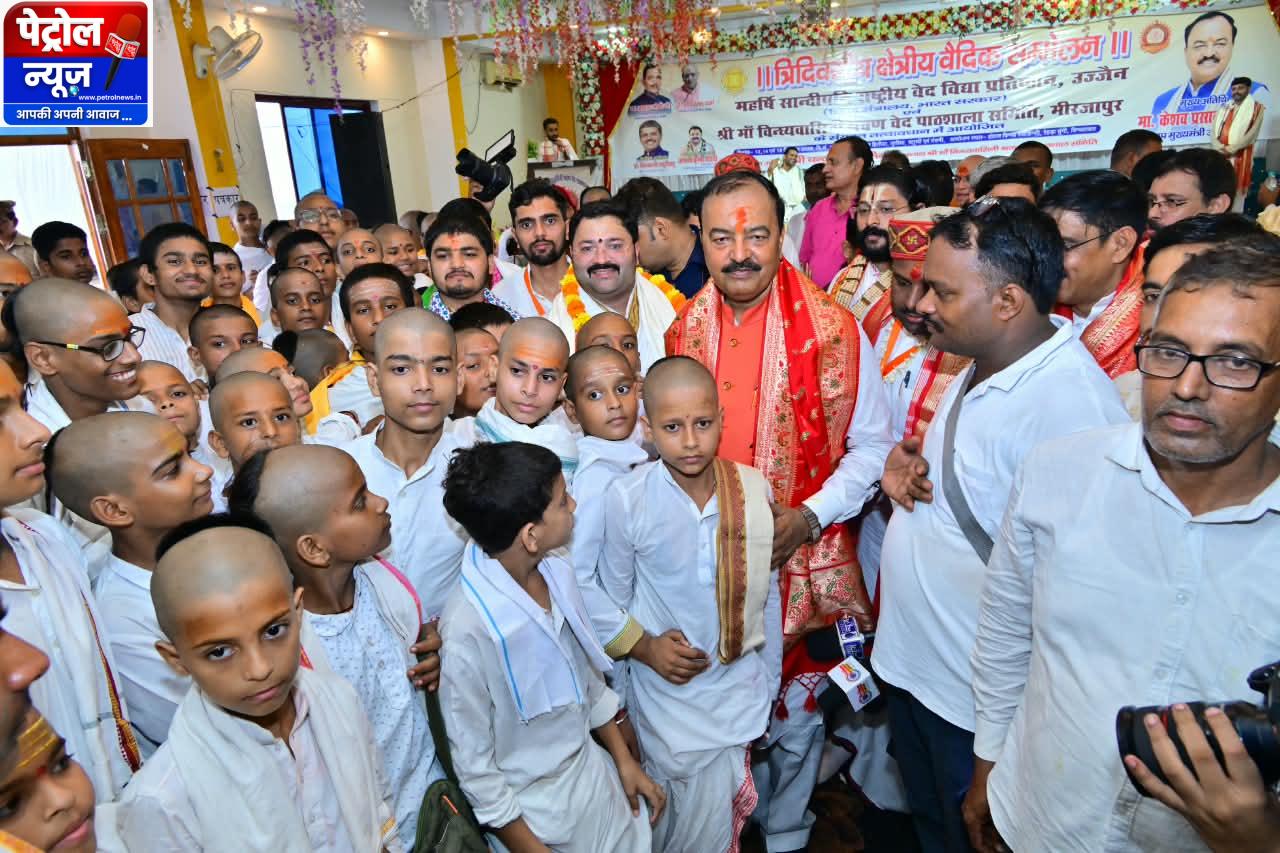
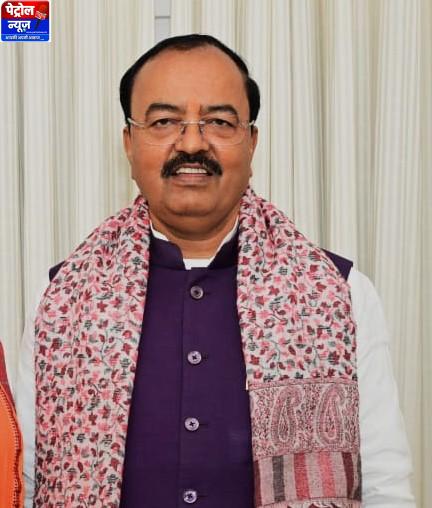
The picture is from August 4, when Champat Rai met Jagadguru Paramhans Acharya, the pontiff of Tapasvi Chhawani.
Nripendra visits Ayodhya every 15 days, but does not meet Champat
Champat Rai also appears upset over Nripendra Misra’s frequent visits to Ayodhya. Misra visits the city roughly every 15 days to attend meetings of the construction committee before returning to Lucknow or Delhi.
According to the temple trust member, whenever Nripendra Misra visits Ayodhya, he does not meet Champat Rai. This suggests that the differences between the two are not limited to correspondence and that communication between them has almost broken down.
Another dimension of the dispute is their contrasting backgrounds. Nripendra Misra is a former IAS officer, while Champat Rai comes from the Vishwa Hindu Parishad (VHP), which has been directly associated with the Ram Temple movement.
In his letter, Champat Rai alleges that Nripendra Misra has always considered himself the supreme authority on decisions related to temple construction.
He alleges that there is hardly any decision related to the temple’s construction that the construction committee does not take on its own. Even when the Trust makes a suggestion, he claims, it is either rejected or the existing construction is removed.
The tone of the letter indicates strong objections over the alleged lack of transparency in the selection of companies and financial decisions related to the temple’s construction.
Champat’s move seen as attempt to limit Misra’s interference
Champat Rai’s latest move is being viewed as a strategy to limit Nripendra Misra’s influence in temple-related affairs. However, construction of the temple is expected to continue until after March 2027. Once the remaining construction work is handed over to the Trust, the Trust itself will decide what role, if any, the construction committee will have.
When contacted by Dainik Bhaskar, Nripendra Misra said:

I can say something only after seeing the letter. I have not read the letter yet. I cannot believe that Champat Rai has written something for me in the letter.
9-page letter contains 33 points
Champat Rai’s nine-page letter contains 33 points covering the temple’s construction journey from the Ram Temple movement to the present. Through the letter, Rai for the first time raises strong objections to Nripendra Misra’s working style and alleged unilateral decision-making.
Champat Rai’s Letter

Champat Rai has issued a 9-page letter.
- Champat Rai writes that in 1528, Babur’s armies demolished the Ram Janmabhoomi temple. He says the struggle to reclaim the temple land then continues for centuries, involving saints of Ayodhya, local kings and princely states, and the wider Hindu community. According to him, the struggle ends in 1949 after the local community occupies the site.
- Between 1950 and 1989, four lawsuits are filed in local courts. The plaintiffs themselves fight these cases. The matter later reaches a three-member bench of the Lucknow Bench of the Allahabad High Court. The hearing continues for around 15 years, with all three judges writing separate judgments. Together, the judgments run to approximately 8,500 pages.
- The Supreme Court attempts to resolve the dispute through mediation and forms a three-member mediation committee. Several rounds of meetings take place between March and July 2019, but no settlement is reached.
- From August 6, 2019, a five-member Constitution Bench of the Supreme Court begins regular hearings. On November 9, 2019, the Supreme Court delivers a unanimous verdict, clearing the way for the construction of the Ram Temple.
- Following the Supreme Court’s directive, the Central Government forms an independent trust, Shri Ram Janmabhoomi Teerth Kshetra, with 15 trustees. One seat is reserved for Nirmohi Akhara and another for Scheduled Caste/Tribe representation. IAS officers are appointed as ex-officio trustees representing the District Magistrate of Ayodhya, the Uttar Pradesh government and the Central Government.
- Suggestions on temple construction made by late Vishwa Hindu Parishad leader Ashok Singhal are conveyed to Nripendra Misra. Larsen & Toubro (L&T) is selected as the temple’s construction agency, while Tata Consulting Engineers (TCE) is chosen to supervise the construction. Noida-based Design Associates, headed by Jai Kakatiyar, is given responsibility for designing other buildings within the temple complex.

Nripendra Misra, chairman of the Ram Temple Construction Committee, used to inspect the construction work every month.

Construction work of the International Ramkatha Museum is underway. It can be opened to the public by December 2027.
Letter details arrangements for Ram Lalla’s darshan
The letter also details arrangements made for devotees visiting the Ram Mandir:
- A Pilgrim Service Centre has been built on Rampath, opposite Birla Dharamshala. The site previously housed a Transport Corporation bus stand. The Trust purchases the land and constructs a two-storey prefabricated building.
- After the consecration of Ram Lalla on January 22, 2024, more than 75,000 devotees visit the temple daily. During the Mahakumbh, daily footfall exceeds 3 lakh devotees.
- Eight queues are created for Ram Lalla’s darshan,one VIP queue, one accessible/wheelchair queue and six general queues. All routes are separate to prevent them from crossing.
- General devotees continue to get darshan even during VIP visits. Separate arrangements are made for Governors, Chief Ministers, Union Ministers and judges.
- Free wheelchairs are available for disabled devotees. The temple premises also provide free arrangements for bhajan, kirtan and Sunderkand.
- The Trust does not use cheques for its bank transactions. All payments are made through bank transfers, with no cash payments. The Trust maintains accounts with SBI, PNB and Bank of Baroda.
- The Trust’s financial transactions undergo both internal and statutory audits. The statutory audit is conducted by Delhi-based firm V. Shankar Iyer.