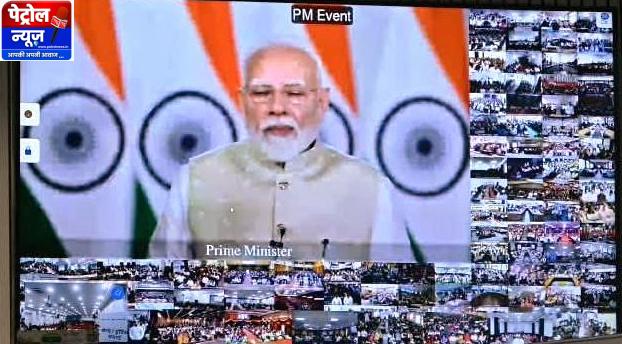

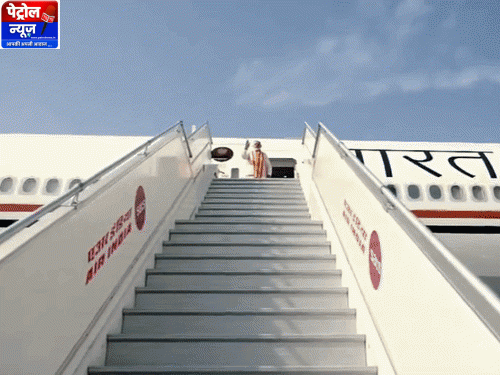

Prime Minister Narendra Modi left Delhi on Saturday morning for a four-day visit to two countries. He will first travel to Uzbekistan, followed by a visit to Kyrgyzstan.
This will be PM Modi’s first Central Asia visit in four years. He will also attend the 26th summit of the Shanghai Cooperation Organisation (SCO) in Bishkek, the capital of Kyrgyzstan.
During the visit, he may meet several leaders, including Chinese President Xi Jinping and Russian President Vladimir Putin.
Uzbekistan visit: Modi to hold bilateral talks, visit Lal Bahadur Shastri memorial
Modi will be in Tashkent, the capital of Uzbekistan, on August 29-30. This will be his fourth visit to Uzbekistan as Prime Minister.
In Tashkent, Modi will hold talks with President Shavkat Mirziyoyev. Discussions will focus on trade, investment, defence, energy, education and ways to strengthen bilateral cooperation.
The two leaders will also discuss new avenues for cooperation under India’s Viksit Bharat 2047 and Uzbekistan’s Uzbekistan-2030 vision.
Modi may also visit the Lal Bahadur Shastri Memorial and the Mahatma Gandhi Centre in Tashkent.
Kyrgyzstan visit: Modi to attend SCO summit, may meet Xi and Putin
After his Uzbekistan visit, PM Modi will be in Bishkek, the capital of Kyrgyzstan, from August 31 to September 1. He will attend the 26th SCO summit there.
India has been a full member of the SCO since 2017. The summit will discuss issues including security, terrorism, trade, connectivity and economic cooperation.
On the sidelines of the summit, Modi may meet Chinese President Xi Jinping, Russian President Vladimir Putin and leaders of other countries.
Modi will also attend the opening ceremony of the 6th World Nomad Games in Bishkek.
Why the visit is important for India: 4 points
1. Rich in minerals: India has long been seeking to strengthen its ties with Central Asian countries. Central Asia has large reserves of oil, gas, uranium and other critical minerals.
2. Energy needs: India wants to expand cooperation with countries in the region to meet its energy requirements.
3. New business routes: India also wants to increase trade with Central Asian countries. It is working on developing new trade and transport routes to facilitate this.
4. Counter-terrorism efforts: India is also strengthening cooperation with these countries on issues such as the situation in Afghanistan and terrorism.
5 key facts about Uzbekistan
1. Double-landlocked country: Uzbekistan has no access to the sea. All of its neighbouring countries are also landlocked. There are very few such countries in the world.
2. Samarkand’s glorious history: Samarkand, which is around 2,700 years old, was once a major city along the Silk Road. Traders travelling between Asia and Europe passed through the city.
3. Major gold producer: Uzbekistan is the world’s 10th-largest gold producer. Muruntau, located in the country, is one of the world’s largest open-pit gold mines.
4. Birthplace of Babur: Babur, the founder of the Mughal Empire, was born in the city of Andijan in 1483. He later travelled to India via Kabul and laid the foundation of the Mughal Empire after winning the First Battle of Panipat in 1526.
Prime Minister Modi’s previous 3 visits to Uzbekistan
2015: Modi visited Uzbekistan for the first time after becoming Prime Minister. During the visit, the two countries focused on strengthening cooperation in trade, energy and security.
2016: Modi attended the SCO summit in Tashkent. During the conference, the process of granting India full membership of the organisation was advanced. India became a full member of the SCO in 2017.
2022: Modi attended the SCO summit in Samarkand. Amid the Russia-Ukraine war, he told Russian President Putin, “Today’s era is not an era of war.” His remark was widely discussed around the world.