


The Ministry of External Affairs on Monday released a statement rejecting the ruling issued by the World Bank-constituted Court of Arbitration on the Indus Water Treaty.
The statement labelled the Court of Arbitration as an ‘illegally constituted’ organisation. The same also said that “ India’s decision to hold the Indus Waters Treaty in abeyance remains in force.”
The same statement also mentioned that “This so-called Court was constituted by the World Bank in patent breach of the terms of the Treaty and India categorically rejects its so-called award, just as it has firmly rejected all prior pronouncements by this illegally constituted body.”
The statement comes at a time when the issue has been a major point of contention between India and Pakistan.
What is the entire issue?
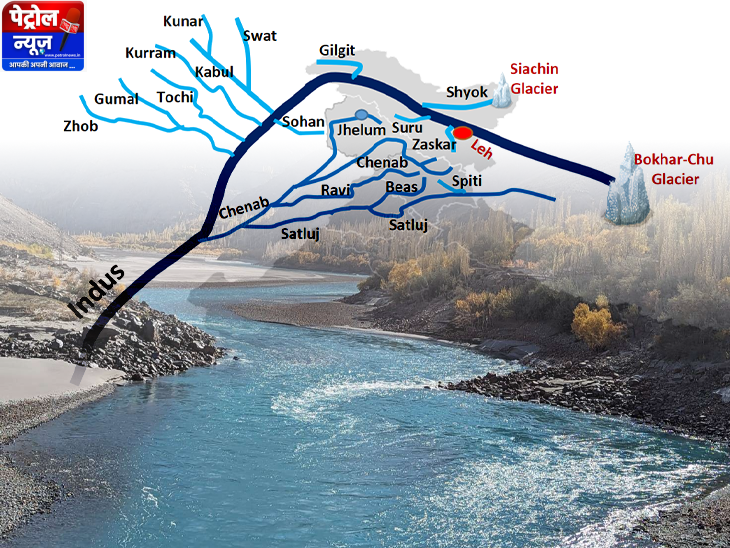
The Indus Water Treaty is a formal agreement between the government of India and the government of Pakistan to distribute the water of the Indus River system. The treaty was signed on September 19, 1960. The World Bank brokered the treaty between the two countries.
As per the treaty, 80 % of the water will be given to Pakistan from the Western rivers, while India will use the remaining 20% of the Water from the Western rivers. Additionally, India has an exclusive right to use 100 % of the Water of the Eastern rivers.

How did the treaty come into effect?
1. The Indus Waters Treaty was signed by India and Pakistan on September 19, 1960, after nine years of negotiations to determine the distribution of the waters of the Indus and its tributaries.
2. The treaty was mediated by the World Bank (then the International Bank for Reconstruction and Development).
3. The World Bank proposed the division of rivers rather than the joint management of the Water system.


India’s earlier rejection on the matter
India had earlier rejected the proceedings of the Court of Arbitration (CoA) constituted under the Indus Waters Treaty (IWT). India has stated that it does not recognise the legitimacy of this court and will not participate in any of its processes.

At that time, the Court of Arbitration has scheduled hearings on February 2-3 at the Peace Palace in the Netherlands. It has also ordered India to submit the ‘pondage logbook’ documents related to the Baglihar and Kishanganga hydropower projects. India has refused to comply with these orders. READ MORE