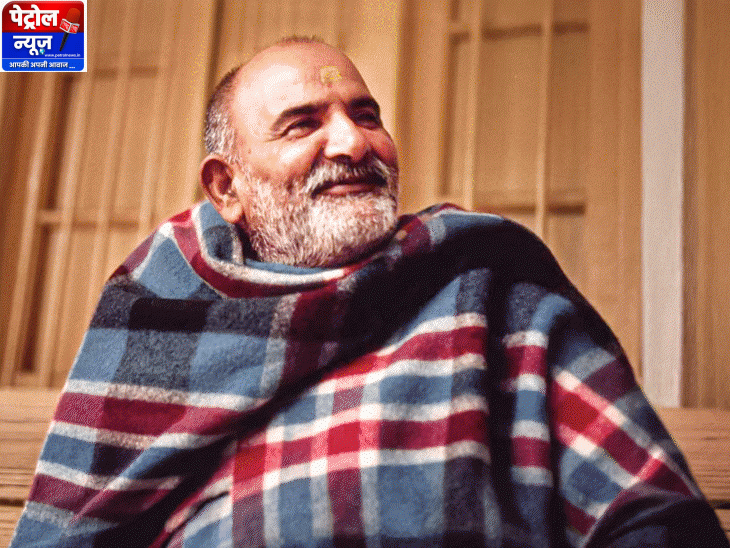




Gandhian social activist Anna Hazare has fallen ill and has been admitted to Bombay Hospital in Mumbai due to a viral infection and dehydration. He is currently in the ICU. Hazare is 89 years old.
Anna Hazare was initially admitted to a hospital in his village, Ralegan Siddhi. However, after his condition deteriorated, he was shifted to Mumbai for further treatment.
The hunger strike that turned into a national movement
Hazare shot to national prominence in 2011 when he launched a hunger strike at Delhi’s Jantar Mantar on April 5, demanding a stronger anti-corruption law and an empowered Lokpal.
The protest came at a time when public anger over corruption was high, with controversies surrounding the Commonwealth Games and 2G spectrum allocation dominating headlines.
What began as a protest by Hazare soon developed into the India Against Corruption movement, drawing large crowds across the country. Students, office workers and families joined demonstrations, while television coverage and social media helped expand the campaign beyond Delhi.
The movement put the issue of corruption at the centre of national political debate and increased pressure on the then government to act on demands for a stronger Lokpal framework.

Several prominent activists and civil society figures were associated with the campaign, some of whom later entered electoral politics.
The movement also sparked debate over its methods, leadership and political impact. Supporters viewed it as a powerful example of public mobilisation, while critics questioned aspects of its approach and demands.
Despite those debates, the 2011 agitation left a lasting mark on Indian politics. It demonstrated the ability of sustained public mobilisation to push an issue to the centre of the national agenda.
Hazare’s hunger strike, which began with a demand for stronger anti-corruption safeguards, ultimately became one of the defining episodes of India’s recent protest politics.