


The Central Government has told the Supreme Court that the creamy layer rule does not apply to reservations for Scheduled Castes (SC) and Scheduled Tribes (ST). The government has opposed those public interest litigations which demand the implementation of the creamy layer in SC-ST reservations and changes in the reservation system based on income in government jobs.
The Centre stated in an affidavit that the petitions do not mention the violation of any fundamental right granted under the Constitution. Also, it has not been stated anywhere that the creamy layer rule applies to SC-ST. According to the government, the concept of creamy layer is only associated with OBC and SEBC reservations.
Demand in the petition – Prosperous SC-ST families should not get the benefit of reservation
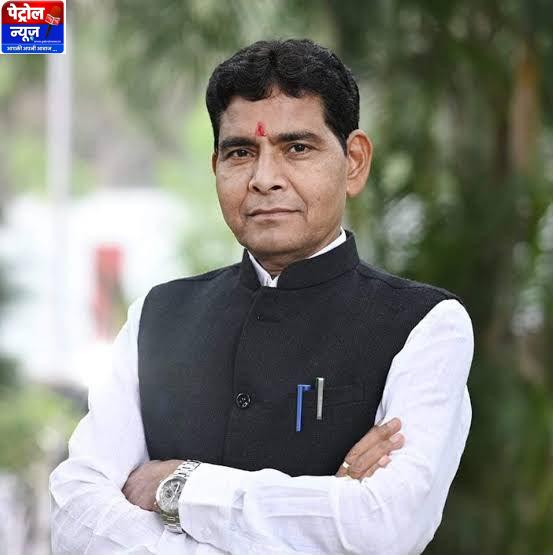
The Supreme Court had issued notices to the Centre and states on public interest litigations by Ramashankar Prajapati and others. The petition stated that if a member of an SC-ST family has already availed the benefit of a constitutional or senior government post, their children should not receive the benefit of reservation.
This would allow the benefits of reservation to reach economically weaker sections more equally. Additionally, the petition sought directions to consider economically weaker sections as a sub-category and give them priority in admissions and government jobs.
Centre said – Only Parliament can change SC-ST list
The Centre clarified that any change in the list of SC and ST can only be made by Parliament. State governments, courts, or any other authority cannot do so. Under Articles 341 and 342 of the Constitution, only Parliament has the right to include or exclude any caste or tribe from the list by making a law.
The Centre said that the petition is based on a wrong premise as it ignores established law. Citing the Indira Sawhney case, the government said that the identification of SC, ST and OBC is based on historical, social and educational backwardness, and not merely on poverty. The Centre said that the Constitution seeks to bring equality by removing historical discrimination, but this discrimination is not based on income or economic backwardness.
Centre cited old judgments
The Centre has referred to several Constitution Bench judgments in support of its stand:
- EV Chinnaiah v. Andhra Pradesh (2005): The Supreme Court had stated that parliamentary law under Article 341(2) would be required to exclude the ‘creamy layer’ from the SC category.
- Indira Sawhney v. Union of India (1992): This discussed the concept of the creamy layer in OBC reservation.
- M. Nagaraj v. Union of India: The Centre stated that the mention of the creamy layer in this was a general remark, and not a declaration that this principle also applies to SC-ST.
- Ashok Kumar Thakur v. Union of India (2008): The Centre argued that the principle of the creamy layer has been applied only in the context of OBC reservation, and not for SC-ST.
The Centre also said that the petition does not make a case for violation of fundamental rights. According to the government, this petition asks the court to interfere in policy matters, for which there is no legislative mandate or concrete basis.