

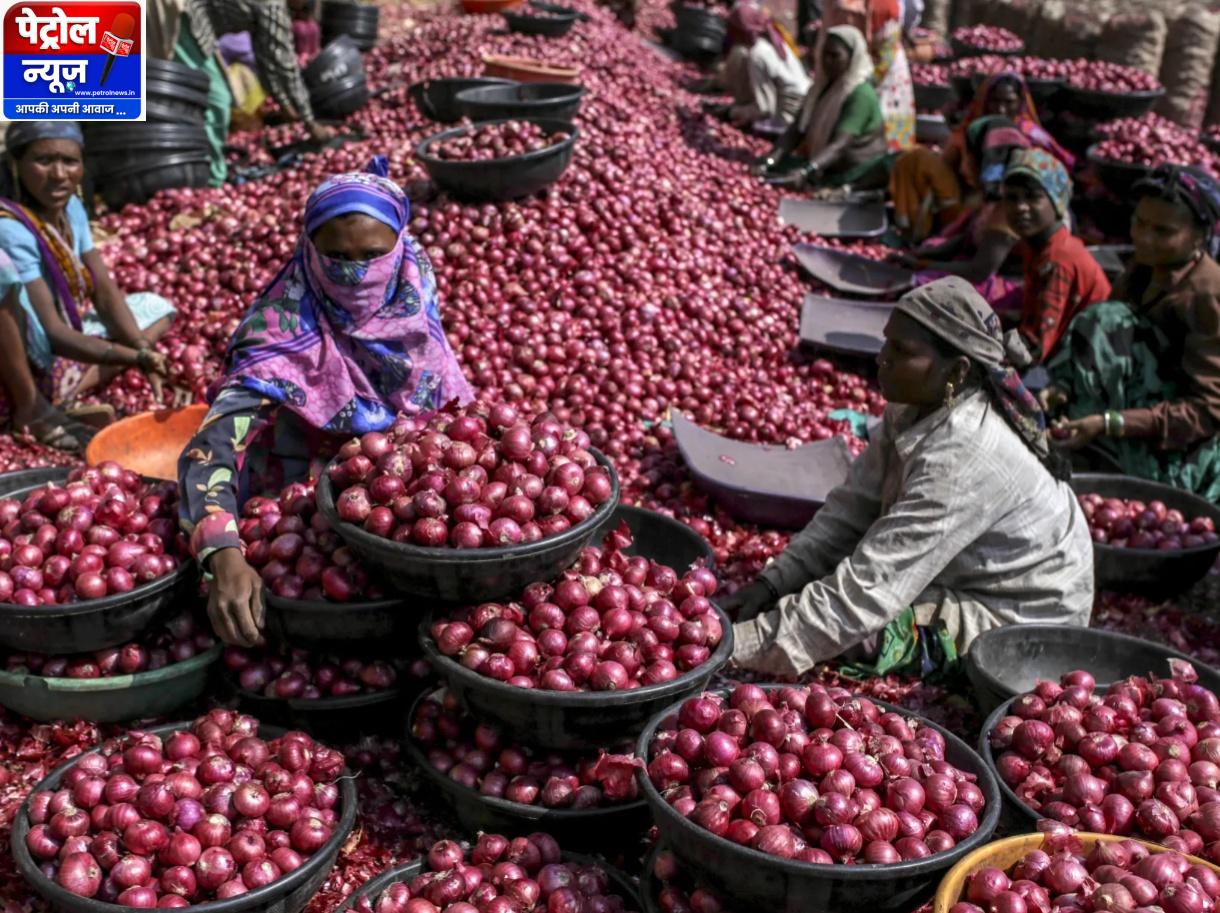


Onion prices rose sharply across the country between June and September. According to government data, the average retail price of onions was ₹29.50 per kg on 1 June.
By 17 September, it had risen to ₹53.78 per kg. This means onion prices recorded a steep 82.3% increase in around three and a half months.
The rise was even sharper in wholesale markets. The average wholesale price of onions was ₹22.60 per kg on 1 June. It rose to ₹46.20 on 10 September and was recorded at ₹45.68 on 17 September.
Thus, wholesale prices have nearly doubled compared with June. The main reason for this rise is damage to Maharashtra’s summer onion crop and lower arrivals in the market.
In addition, onion supplies from both Maharashtra and Karnataka have declined. Supply is also under pressure because of delays in the arrival of the new kharif crop in the market.

Government measures to reduce onion prices and their impact
Relief from buffer stocks: The government buys onions at low prices and stores them, releasing them into the market at affordable rates such as ₹35 per kg as soon as prices rise, to provide relief to the general public.
Restrictions on exports: When there is a shortage in the country, the government imposes a tax on onion exports or bans them, ensuring that onions do not become scarce domestically.
Impact on the common man: Government-supplied onions reduce the burden on household budgets to some extent, but higher retail prices and frequent changes in policies mean that complete relief is not achieved.

Why do onion prices rise at this time of year?
Onion prices rise every year between August and September. There are mainly three major reasons behind this:
Rising demand during the festive season: Consumption increases because of Raksha Bandhan, the Ganesh festival and the upcoming festivals.
Weather and logistics: Rain affects the supply chain, causing produce to reach the markets late.
Crop cycle: Stocks from the old crop start running out, while the arrival of the new kharif crop takes some time.